

Launching a new website is an exciting milestone, whether you are starting a personal blog, setting up an e-commerce store, or establishing a digital footprint for your brick-and-mortar business. However, once the initial excitement settles, a practical question inevitably arises: how do you budget for the digital real estate required to keep your site online?
Those who are new to building websites may find it helpful to first understand the basics of web hosting and how hosting affects a site’s performance.
Table of Contents
Understanding website hosting fees can feel like navigating a maze. With thousands of providers throwing technical jargon and complex pricing tiers at you, it is easy to end up overpaying for resources you do not need—or worse, underpaying and suffering from a slow, unreliable website.
In this comprehensive guide, we will decode the true web hosting cost, explore the different types of hosting available, and reveal the hidden fees that can catch you off guard.
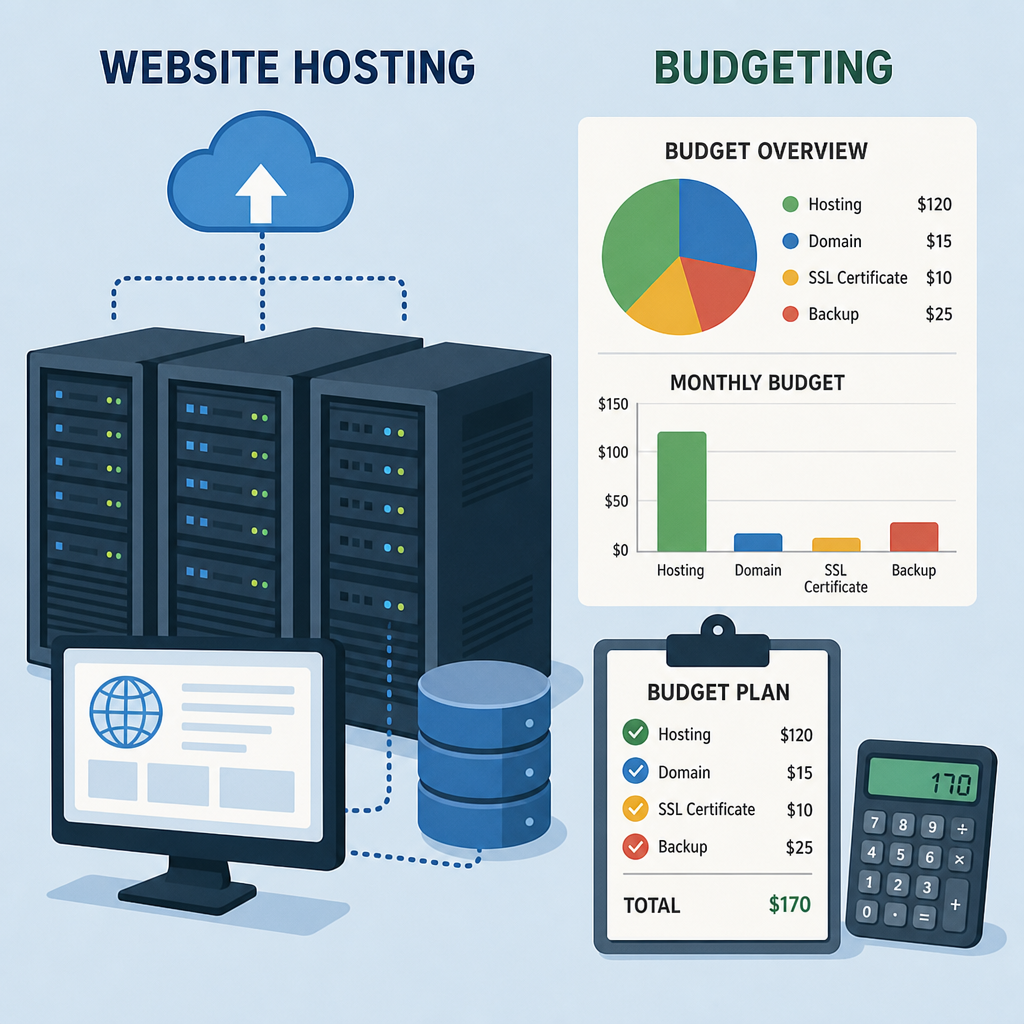
The Big Question: How Much Does It Cost to Host a Website?
If you have ever typed “how much does it cost to host a website” into a search engine, you have likely seen answers ranging from $2 a month to well over $500. This massive price gap exists because websites have vastly different needs. A simple static portfolio site requires a fraction of the server power needed by a sprawling online store handling thousands of daily transactions.
To minimize your overall cost, hosting should be viewed not as a flat fee, but as a spectrum of services tailored to your specific traffic, storage, and security requirements.
Breaking Down the Main Types of Hosting (and Their Costs)
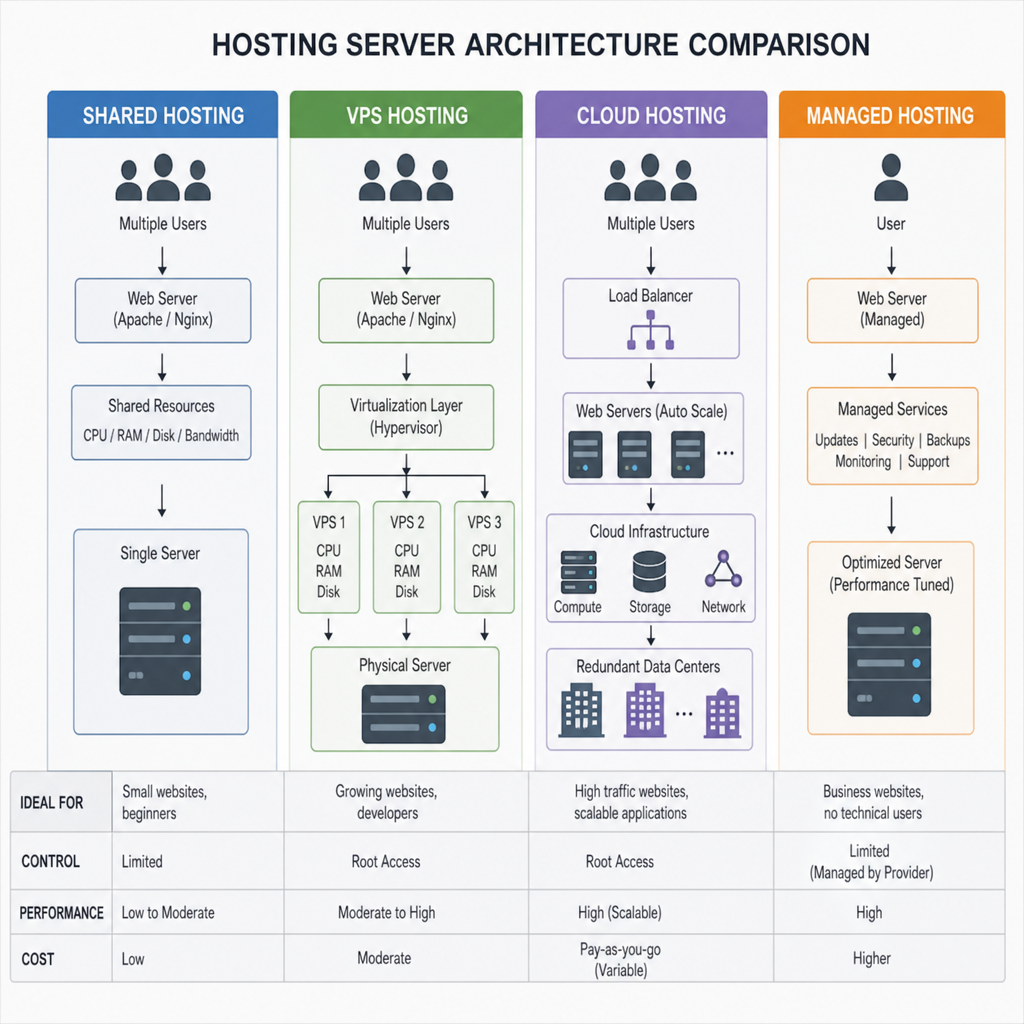
The core driver of your hosting services cost is the specific server architecture you choose. Let’s break down the primary categories.
Shared Hosting (The Beginner’s Choice)
When researching hosting, shared hosting is almost always the starting point. In this setup, your website lives on a single server alongside hundreds of other websites. Because you share resources (like RAM and processing power), the costs are kept remarkably low.
- Estimated Price: $2 to $10 per month.
- Best For: Personal blogs, small portfolios, and brand-new websites with low traffic.
- If you are looking for budget-friendly web hosts for beginners, shared hosting providers often bundle in free domain registrations and website builders to get you started effortlessly.
VPS Hosting (The Middle Ground)
VPS (Virtual Private Server) hosting still involves sharing a physical server, but the server is partitioned into dedicated virtual spaces. This means your site has guaranteed resources that cannot be drained by a sudden traffic spike on another person’s website.
- Estimated Price: $15 to $50 per month.
- Best For: Growing businesses, medium-traffic blogs, and smaller e-commerce sites.
- When analyzing shared vs VPS hosting pricing, the jump in cost is justified by the massive improvement in speed, reliability, and security.
Cloud Hosting
Instead of relying on a single physical server, cloud hosting pulls resources from a network of connected virtual servers. If one server goes down, another instantly takes its place. Furthermore, cloud hosting pay-as-you-go pricing models allow you to only pay for the exact amount of computing power and storage you consume.
- Estimated Price: $10 to $100+ per month (highly variable).
- Best For: Websites with unpredictable traffic spikes, corporate sites, and scaling startups.
Managed WordPress Hosting
If you use WordPress, you might want an environment specifically optimized for it. Managed WordPress hosting providers take care of the technical backend, including automated daily backups, core software updates, and advanced security protocols.
- Estimated Price: $20 to $100+ per month.
- Best For: Serious bloggers, agencies, and businesses that rely heavily on WordPress.
- Doing a managed WordPress hosting price comparison is highly recommended, as some providers include premium plugins and themes that offset the higher monthly rate.
Free vs Paid Hosting Services: Is Free Worth It?
When you are on a tight budget, zero-dollar hosting looks incredibly tempting. However, when comparing free vs paid hosting services, the old adage rings true: you get what you pay for.
Free hosting almost always comes with severe limitations. Your web space cost might be zero, but you will pay in other ways: forced advertisements on your pages, incredibly slow loading speeds, zero customer support, and the inability to use a custom domain name (e.g., you’ll be stuck with yourbusiness.freewebsite.com). For any professional endeavor, a paid hosting service is an absolute, non-negotiable necessity.
The Reality for Small Businesses
If you are a business owner, you cannot afford downtime. So, what is the average cost of web hosting for small business operations?
For a standard service-based small business (like a local plumber, law firm, or bakery), you should expect to spend between $10 and $30 per month. If you are running an e-commerce store with hundreds of products, expect that number to jump to $30 to $100 per month to handle secure transactions and heavier database loads. Budgeting for these realistic web hosting fees ensures your site remains snappy and responsive, which directly impacts your search engine rankings and customer retention.
Unmasking the Hidden Website Maintenance Costs
The sticker price you see on a hosting provider’s homepage is rarely the final amount you pay. When planning your budget, you must account for hidden website maintenance costs that accumulate over time.
Domain Name Registration
Your hosting is the physical land, but your domain name (like www.yourname.com) is the street address. While some hosts offer a free domain for the first year, you will eventually have to renew it.
- How much does a domain name cost per year? Usually between $10 and $20 for standard .com or .org extensions, though niche extensions (like .tech or .io) can cost upward of $50 annually.
SSL Certificates
An SSL certificate encrypts data passing between your website and your visitors, which is mandatory for e-commerce and highly rewarded by Google’s algorithm. Many modern hosts provide free “Let’s Encrypt” SSLs. However, enterprise-grade validation certificates can carry steep SSL certificate renewal prices, ranging from $50 to $200+ per year.
Professional Email
Using a generic @gmail.com address looks unprofessional for a business. While some traditional hosts include basic email, many modern cloud setups do not. To get a custom @yourdomain.com address, you will need a third-party service like Google Workspace or Microsoft 365. These professional email hosting costs usually run about $6 to $12 per user, per month.
Overage Fees
Always read the fine print regarding data limits. If your website suddenly goes viral, you might exceed your allocated monthly data transfer. Some providers will throttle your site’s speed, while others will hit you with hefty bandwidth and storage overage charges.
Premium Support
When your site goes down in the middle of a major sales campaign, you need immediate help. While basic chat support is standard, some providers lock priority phone routing or dedicated account managers behind premium technical support add-on pricing, which can add $10 to $50 to your monthly bill.

Smart Billing: Annual vs Monthly Billing Cycles
One of the biggest traps in the hosting industry revolves around how and when you pay. When you see a massive banner advertising hosting for “$2.95 a month,” there are usually two massive caveats attached to that price tag.
- The Commitment: To get that ultra-low rate, you are often required to pay for three or four years upfront. When comparing annual vs monthly billing cycles, paying monthly gives you flexibility, but it usually doubles or triples the monthly rate.
- The Renewal Shock: The advertised price is almost always an introductory rate. You must actively investigate the introductory discount vs regular renewal rates. It is incredibly common for a $3/month plan to jump to $12/month once your initial term expires. Always budget based on the renewal rate, not the promotional rate.
How to Estimate Website Server Costs Effectively
Now that we have unpacked the variables, here is a simple, actionable framework on how to estimate website server costs before you commit to a provider.
- Calculate Your Base Traffic: If you expect less than 10,000 visitors a month, standard shared hosting will suffice. If you expect more, or if you run resource-heavy plugins, start your estimates at VPS pricing.
- Determine Your Storage Needs: Assess the size of your web files. A photography portfolio requires vastly more gigabytes than a text-based blog. Understanding your web space cost upfront will prevent unexpected upgrade requirements.
- Factor in the Add-ons: Add your domain renewal ($15), your email hosting ($72/year), and your SSL (if not free).
- Look at the Renewal Price: Take the normal, non-discounted monthly rate, multiply it by 12, and add your domain and add-on costs. This final number is your true, recurring annual obligation.
By following these steps, you won’t just look at the promotional website hosting fees; you will have a highly accurate picture of the total cost of ownership for your digital presence.
Conclusion
Navigating the landscape of website hosting fees does not have to be a frustrating experience. By understanding the core differences between shared, VPS, and cloud architectures, you can accurately match your technical needs to your budget.
Remember, cheaper is not always better. The lowest web hosting fees often come at the expense of site speed, security, and customer service. As a rule of thumb, invest as much in your digital presence as you would in your physical storefront. By watching out for hidden maintenance costs, understanding your billing cycles, and accurately forecasting your resource needs, you can secure reliable, high-performance hosting that allows your website—and your business—to thrive.
Ready to launch or upgrade your website? Visit Hostinger and compare its hosting plans to find the right option for your needs.
“This article contains affiliate links, meaning we may earn a commission at no additional cost to You “ editorial@BLAK BEIGE