

Building a successful website is remarkably similar to constructing a house. Before you can worry about the paint colors, interior design, or the furniture, you need a rock-solid piece of land to build it on. In the digital world, that foundational real estate is your web host.
Those who are new to building websites may find it helpful to first understand the basics of web hosting and how hosting affects a site’s performance.
However, looking at the thousands of options on the market today can feel incredibly overwhelming. If you find yourself wondering how to choose a hosting provider without getting bogged down by technical jargon, you are in the right place.
Table of Contents
Making the wrong choice can lead to slow loading times, frequent crashes, and security vulnerabilities—all of which drive visitors away and tank your search engine rankings. Conversely, the right provider operates silently in the background, keeping your digital storefront open, secure, and blazing fast.
Let’s dive into a comprehensive, step-by-step guide on how to choose web hosting that perfectly aligns with your technical needs and business goals.
Understand Your Website’s Specific Needs
Before you start comparing different companies, you have to look inward. The perfect host for a local bakery’s static website will look very different from the ideal host for a high-traffic e-commerce store.
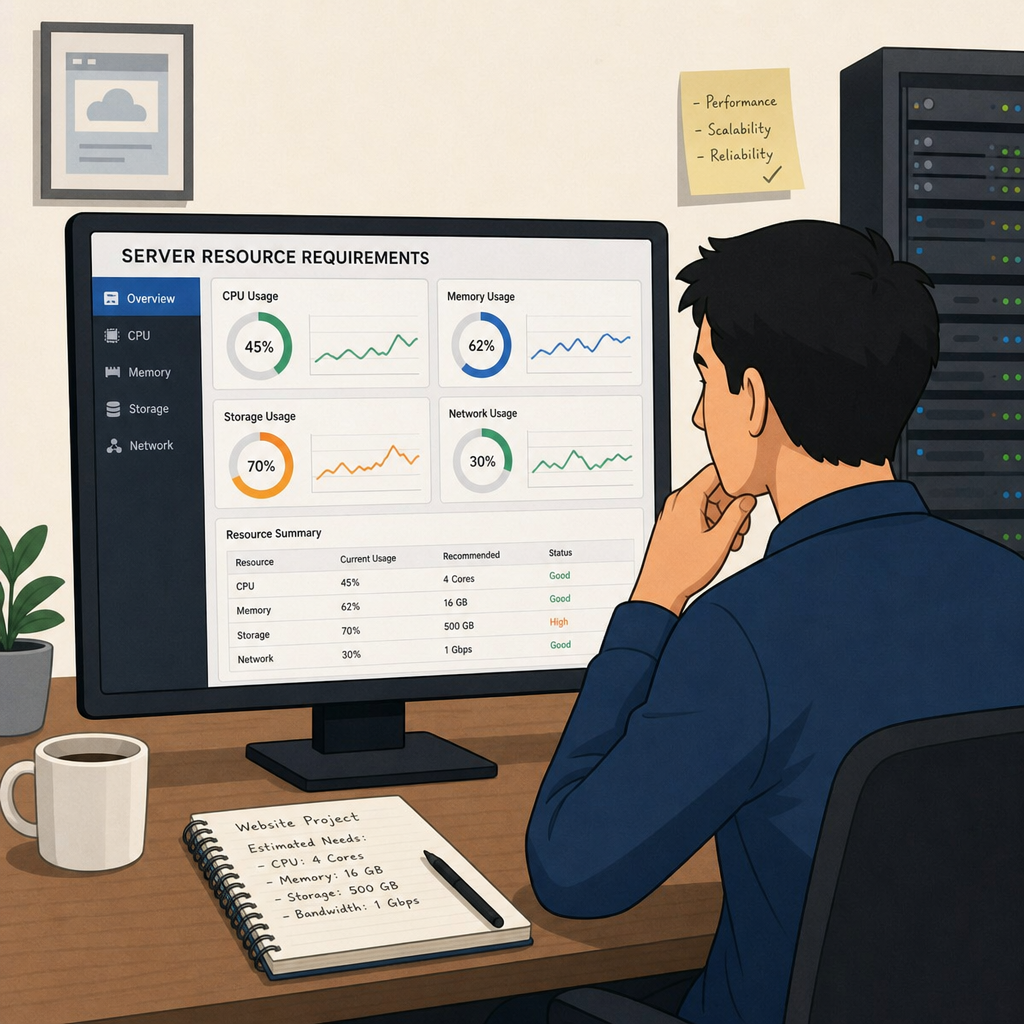
If you are new to website management, you might be asking yourself: what are web hosting server resources? In short, these are the digital components—like RAM (memory), CPU (processing power), and storage—that a server allocates to your website so it can function.
To determine how much power you need, you must first calculate your bandwidth and disk space requirements.
- Disk Space: This is the amount of storage required for your website’s files, images, videos, and databases. A text-heavy blog requires very little disk space, while a site hosting hundreds of high-resolution product videos will need significantly more.
- Bandwidth: This refers to the amount of data transferred between your website and your visitors. If you expect a few hundred visitors a month, a basic plan will suffice. If you anticipate sudden viral traffic spikes, you need unmetered or highly scalable bandwidth.
Evaluate the Different Types of Web Hosting
One of the biggest hurdles when figuring out how to choose a web hosting provider is understanding the different server environments. The foundation of this decision often comes down to comparing shared vs VPS vs dedicated hosting.
- Shared Hosting: Think of this as renting an apartment in a large building. You share the server’s resources (and costs) with hundreds of other websites. It’s highly affordable and great for beginners, but if another site on your server gets a massive traffic spike, your site’s performance might temporarily drop.
- VPS (Virtual Private Server) Hosting: This is like owning a townhouse. You still share a physical server, but the hardware is virtually partitioned. You have your own dedicated slice of resources, meaning other websites cannot impact your performance.
- Dedicated Hosting: This is the equivalent of owning a private estate. You rent an entire physical server exclusively for your website. It offers maximum power and customization but comes at a premium price.
Beyond the server type, you must also decide between managed vs unmanaged hosting services. If you are not a server administrator, you will want a managed plan. With managed hosting, the provider takes care of hardware maintenance, software updates, and security patches. Unmanaged hosting leaves all the technical configuration and maintenance entirely up to you.
Prioritize Speed, Uptime, and Performance
When exploring how to choose a web hosting service, performance should be near the top of your priority list. The modern internet user is impatient; if your site takes more than three seconds to load, a significant portion of your audience will simply bounce to a competitor.
First, pay close attention to site speed and loading performance. A high-quality host uses optimized server technology, lightweight architecture, and modern caching systems to deliver your pages instantly. Look for providers that utilize NVMe SSD storage and the latest PHP versions.
Next, you need to verify the host’s server uptime and reliability metrics. Uptime is the percentage of time your website is accessible to the public. You should never settle for an uptime guarantee lower than 99.9%. Even a 0.1% drop in uptime equates to almost 9 hours of downtime over the course of a year, which can be disastrous during peak sales periods.
Finally, consider data center locations and latency. Latency is the delay between a user clicking a link and the server responding. Physical distance plays a huge role here. If your primary audience is in London, but your web host’s data center is in Sydney, your visitors will experience noticeable lag. A top-tier provider will allow you to choose from multiple global data centers so you can place your site physically closer to your target demographic.

Never Compromise on Security and Backups
Cyber threats are evolving daily. Whether you run a personal blog or a corporate site, robust security is non-negotiable. As you learn how to choose a website host, you must actively hunt for comprehensive built-in protections.
Look closely at the website hosting security features offered out of the box. A reliable host should provide web application firewalls (WAF), automated malware scanning and removal, DDoS protection, and brute-force defense mechanisms.
Furthermore, you should only consider providers that offer free SSL certificates and daily backups.
- SSL Certificates: These encrypt the data passing between your user’s browser and your website, displaying the trusted padlock icon in the URL bar. It is essential for protecting user data and is a confirmed Google ranking factor. Paying extra for a basic SSL certificate is a dated practice; modern hosts provide them for free via Let’s Encrypt.
- Daily Backups: Mistakes happen. You might accidentally delete a vital page, or a plugin update might break your site layout. Automated daily backups act as an undo button, allowing you to restore your website to a pristine state with just one click.
Assess Usability, CMS Compatibility, and Growth Potential
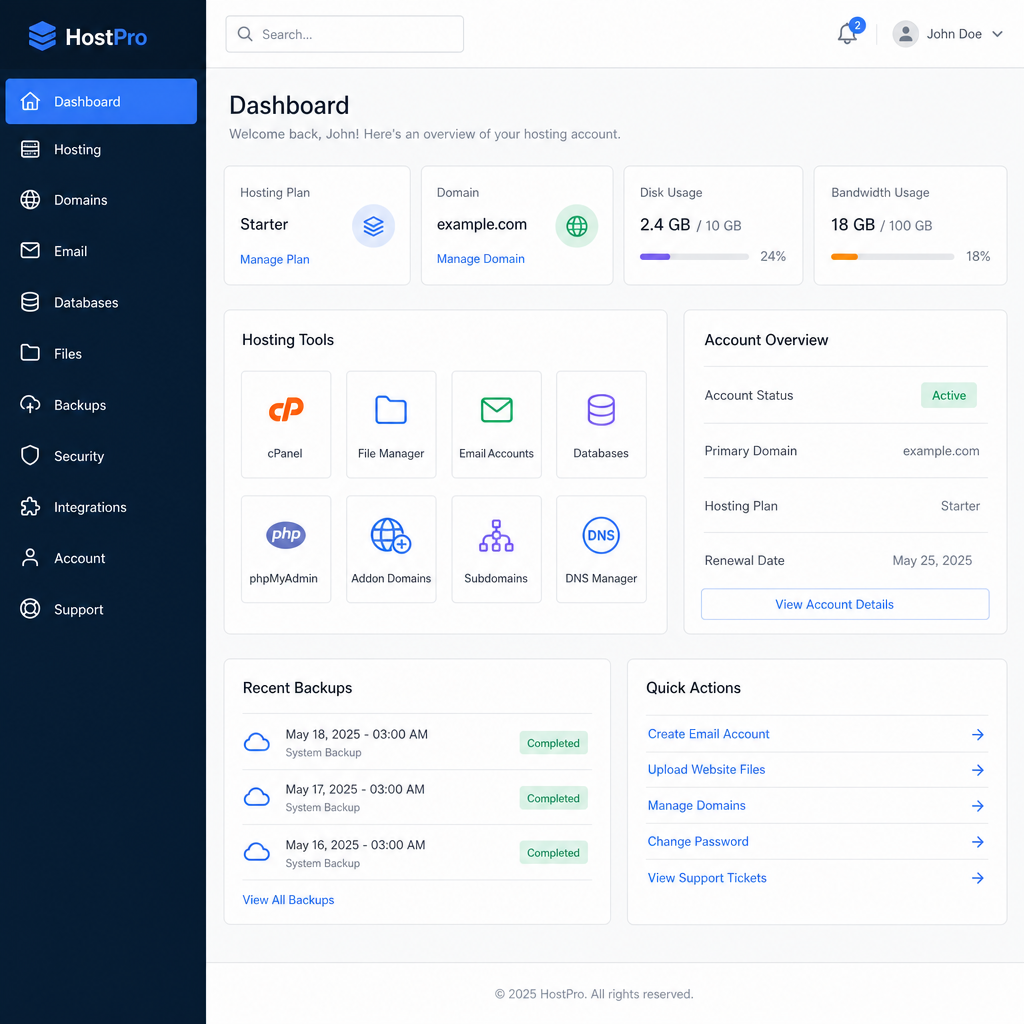
Your daily interaction with your web host will happen through a dashboard. If that dashboard is clunky, outdated, or overly complicated, website management will become a frustrating chore.
When evaluating options, check the control panel interface ease of use. Many providers use industry standards like cPanel or Plesk, which are highly documented and user-friendly. Others have developed custom, proprietary dashboards. Before committing, see if the host offers a demo of their backend to ensure you feel comfortable navigating it.
Additionally, ensure seamless CMS compatibility for WordPress sites (or whichever Content Management System you prefer). WordPress powers over 40% of the web. If you plan to use it, your host should offer optimized WordPress environments, one-click installations, and automated core updates.
You also need to think about the future. Your website might be small today, but what happens when your traffic doubles or triples? You must ensure there is clear scalability for growing websites. The best hosts allow you to seamlessly upgrade from a shared plan to a VPS, and eventually to a dedicated server, without experiencing downtime or having to rebuild your site architecture from scratch.
Investigate Customer Support and Migration Services
No matter how robust a platform is, you will eventually run into a technical hiccup. When your website goes offline during a major promotional campaign, you don’t want to be stuck waiting 48 hours for an email reply.
This is why technical support response times are a critical factor when deciding how to choose a hosting company. Look for hosts that offer 24/7/365 support across multiple channels, including live chat, phone, and ticketing. Read independent customer reviews on sites like Trustpilot to see how the company actually handles high-stress situations. Do they resolve issues quickly, or do they just pass you around to different departments?
If you already have an existing website and are looking to switch providers, check for website migration service availability. Moving a website involves transferring files, databases, and domain configurations—a process that can easily result in data loss if done incorrectly. Many premium hosts employ dedicated migration experts who will transfer your site for free, ensuring zero downtime during the move.
Decode the Pricing Structure
Cost is undeniably a major factor in how to choose hosting. However, the web hosting industry is notorious for slightly deceptive pricing models, making it crucial that you read the fine print.
Pay very close attention to hosting plan pricing and renewal rates. The boldly advertised price (e.g., “$2.95/month”) is almost always an introductory rate that requires you to pay for two to three years upfront. Once that initial term expires, the plan will automatically renew at the regular rate, which can be three to four times higher than the introductory price.
Actionable Pricing Tips:
- Calculate the total long-term cost: Don’t just look at the first year; calculate what the host will cost you over a three-to-five-year period.
- Watch out for upsells: During checkout, many providers will pre-check boxes for add-ons like premium SEO tools, site lock security, or professional email. Uncheck what you don’t need to avoid bloating your bill.
- Check the refund policy: Always look for a host that offers at least a 30-day money-back guarantee so you can test their services risk-free.
Conclusion
Understanding how to choose a hosting provider doesn’t have to be a guessing game. By taking the time to evaluate your specific resource needs, comparing server environments, and prioritizing vital features like security, uptime, and customer support, you can make a highly informed decision.
Remember, your web host is a long-term business partner. Don’t simply default to the absolute cheapest option on the market. Invest in a provider that offers rock-solid performance, clear scalability, and transparent pricing. When you build your digital presence on a stable, high-performance foundation, you free up your time and energy to focus on what truly matters: growing your audience and scaling your business.
Looking for fast and affordable web hosting? Explore Hostinger’s latest hosting plans and choose the package that best suits your website.