

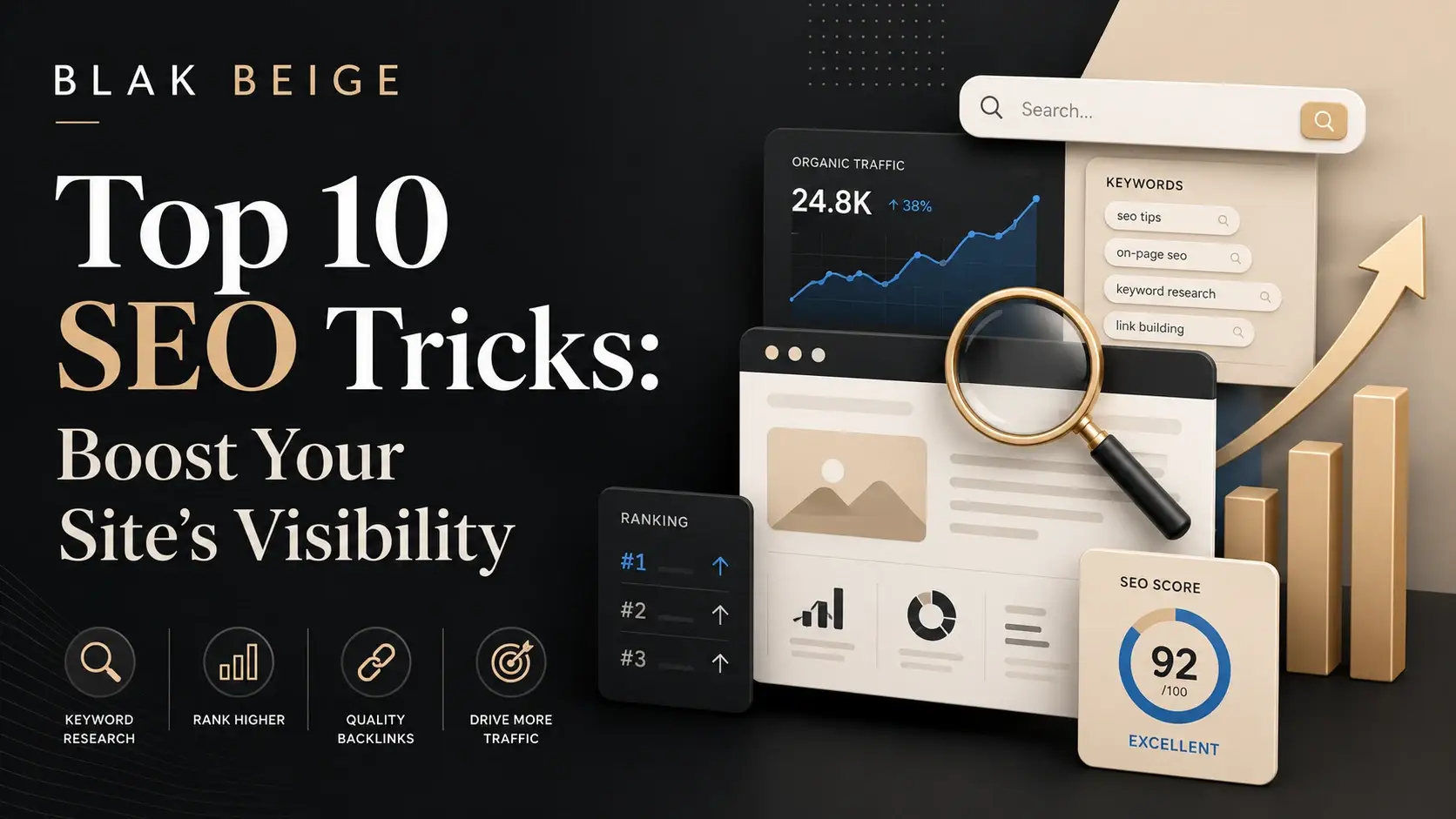
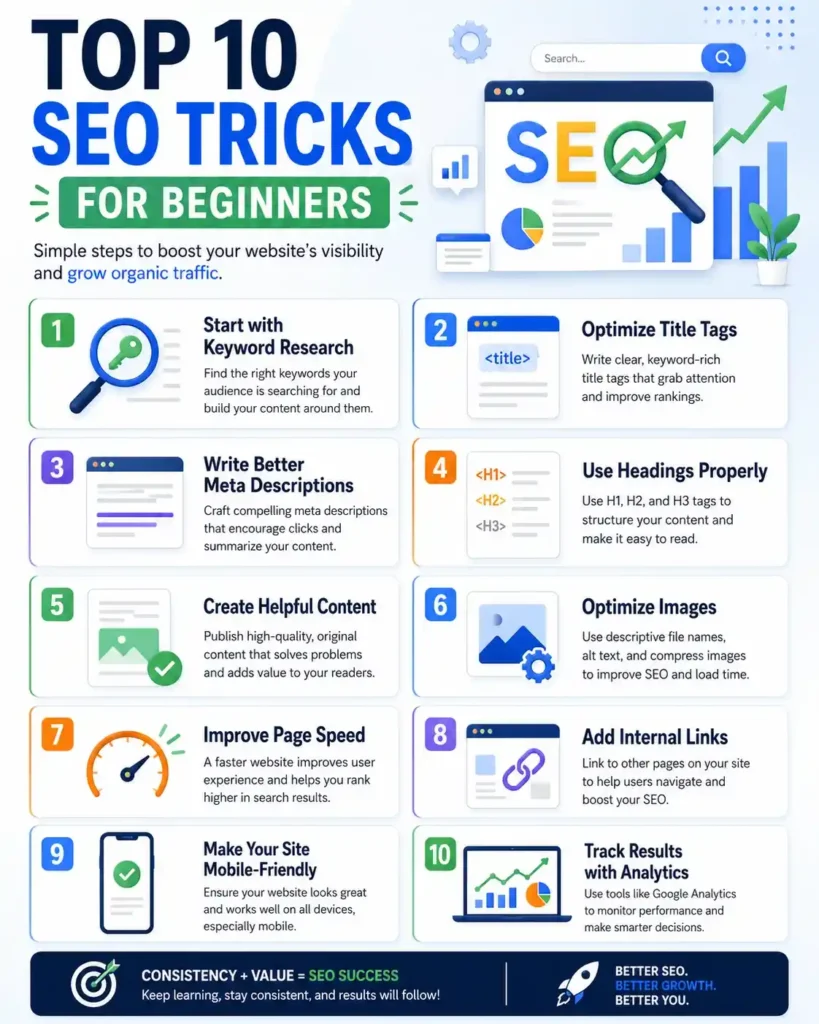
Top 10 SEO Tricks for Beginners
Search engine optimization (SEO) can seem daunting for beginners. But mastering a few basic SEO tips can make a big difference.
SEO is crucial for improving your website’s visibility and ranking on search engines. It helps attract more visitors and potential customers.
Understanding SEO tricks can give you a competitive edge. It involves optimizing various elements of your website to meet search engine criteria.
From keyword research to writing for search engine optimization, there are many aspects to consider. Good SEO practices can enhance user experience and engagement.
This guide will introduce you to essential SEO recommendations. You’ll learn quick SEO tips to boost your site’s performance.
Table of Contents
Let’s explore the top 10 SEO tricks for beginners to get you started on the right path.
1. Master Keyword Research
Keyword research is the bedrock of good SEO practices. Understanding the words your audience uses helps tailor content to their needs. Begin with tools like Google Keyword Planner for insightful data.
Focus on long-tail keywords. These phrases are less competitive and target specific audiences. For instance, “best hiking shoes for wide feet” is more precise than “hiking shoes.” Using specific terms enhances visibility.
Key steps to master keyword research:
- Use keyword tools for accurate data.
- Analyze competitors’ keyword strategies.
- Focus on user intent.
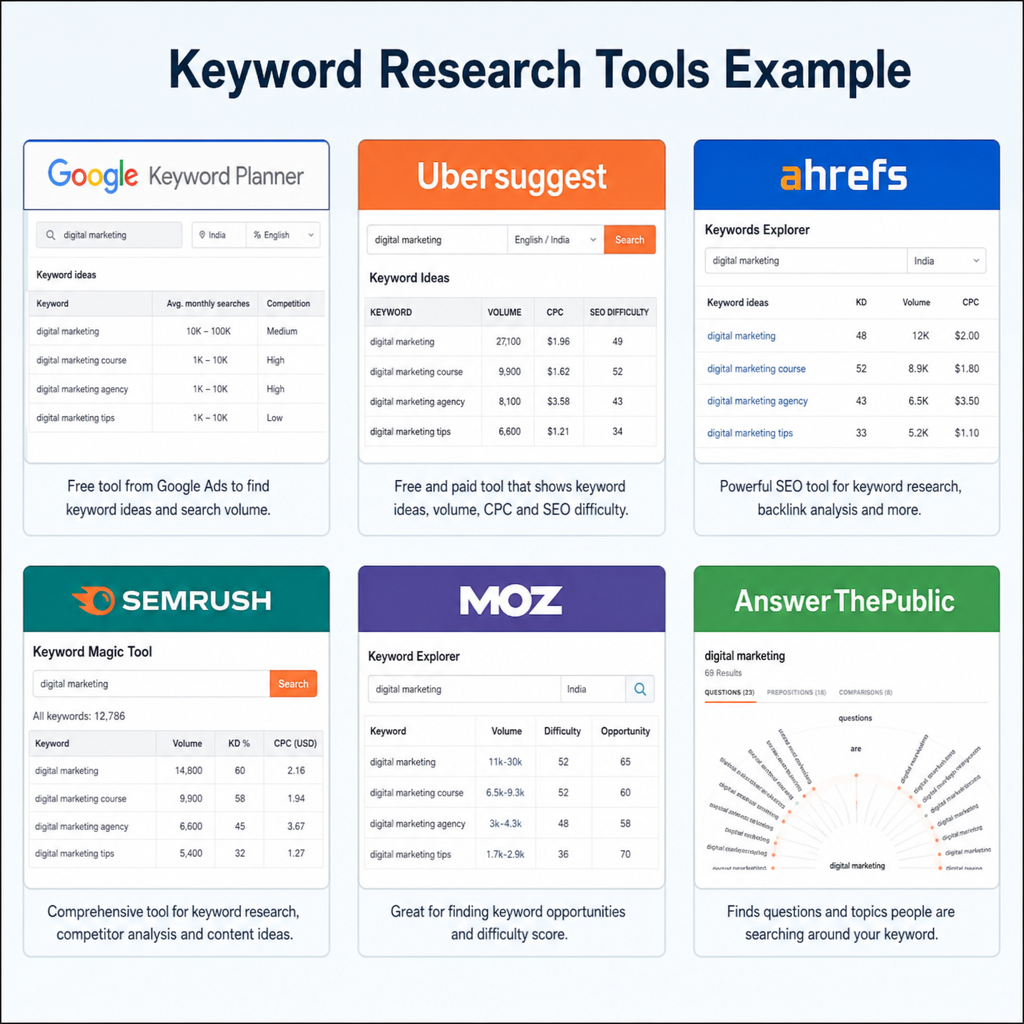
Incorporate keywords naturally within your content. Overusing them, known as keyword stuffing, can lower your search ranking. Aim for balanced distribution, enhancing both SEO and readability.
Understanding what users search for helps create relevant content, improving both ranking and engagement. As you refine your keyword research process, you’ll see improvements in traffic and user interaction. Remember, a strong keyword strategy is vital for writing for search engine optimization.
2. Optimize Title Tags and Meta Descriptions
Title tags and meta descriptions are crucial components of SEO best practices. They directly influence your website’s click-through rate. Craft compelling and descriptive titles to attract potential visitors.
Use concise and clear language in your title tags. Each title should reflect the content accurately. Ideally, keep titles under 60 characters for full visibility in search results.
Tips for optimizing title tags and meta descriptions:
- Include primary keywords naturally.
- Write enticing and informative summaries.
- Tailor descriptions to match user intent.
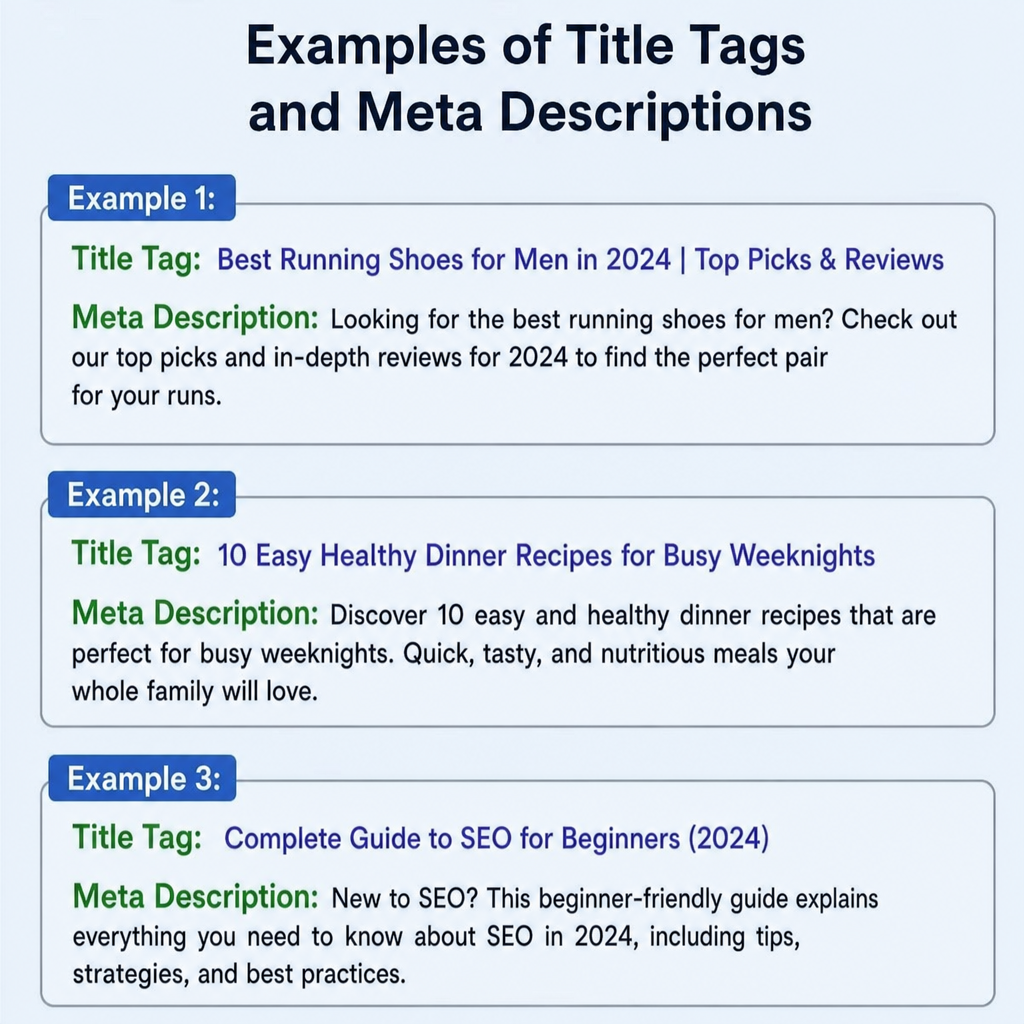
Meta descriptions should not only summarize the page but entice users to click. Limit the length to around 160 characters to ensure it’s fully visible.
Balancing keywords with engaging content in titles and descriptions is essential. This practice enhances visibility and increases the likelihood of users clicking on your link. A well-crafted meta description can set your content apart from competitors, making it a vital part of good SEO practices.
3. Use Header Tags for Structure
Header tags, such as H1, H2, and H3, organize your content. They improve readability and help search engines understand the hierarchy. Using them effectively is a basic SEO tip that cannot be overlooked.
Place your main keyword in the H1 tag, which represents the main title. Subheadings (H2, H3) should logically divide your content. This aids both search engines and readers in navigating your article.
Effective use of header tags includes:
- Structuring content into sections and subsections.
- Highlighting important concepts for easy scanning.
- Enhancing the overall user experience.
Proper use of header tags also optimizes your page for featured snippets. These snippets often pull content from well-structured articles, further boosting your search engine visibility.
4. Create High-Quality, Original Content
Creating content that resonates with your audience is key. High-quality, original content captivates readers and builds trust. Search engines prioritize unique content, boosting your site’s visibility.
Focus on delivering value in your articles. Address your audience’s questions and provide clear, thorough answers. This not only attracts visitors but keeps them engaged.
To ensure your content remains relevant, regularly update it. Refresh outdated information and align your articles with current trends. Consistency is part of good SEO practices.
Characteristics of high-quality content include:
- Original and valuable information.
- Engaging and easy-to-read text.
- Well-researched and factually correct data.

Avoid keyword stuffing, as it harms readability and search ranking. Instead, use natural language that flows smoothly. By prioritizing your readers’ needs, you can enhance engagement, boosting both user satisfaction and search engine optimization.
5. Improve Website Speed and Mobile Friendliness
Fast loading times are critical for good SEO. Users expect quick access to information. A slow site can lead to higher bounce rates, affecting your rankings.
Test your site’s speed using tools like Google’s PageSpeed Insights. Identify areas for improvement, such as image compression or caching. Each second of speed makes a difference.
Mobile users dominate the web today. Your site must adapt to various devices. Responsive design ensures a seamless experience, regardless of screen size.
Google uses mobile-first indexing, which means mobile performance impacts your SEO. This emphasizes the need for mobile optimization. Prioritize this by regularly testing your site on mobile devices.
Ways to improve speed and mobile friendliness:
- Minimize CSS and JavaScript files.
- Enable browser caching.
- Optimize images for quick loading.

Remember, a fast and mobile-friendly site enhances user experience and boosts search engine visibility. Focus on these elements to keep users satisfied and engaged.
6. Leverage Internal and External Linking
Internal links connect different pages within your site. They help users navigate and understand the structure. Plus, they distribute page authority, boosting SEO.
External links guide users to valuable resources outside your site. They can enhance credibility when linked to trusted sources. Be strategic with your external links for maximum impact.
Creating a robust linking strategy improves search engine understanding of your content. It can also increase dwell time, as users explore more pages. Both internal and external links contribute to this effect.
Effective linking strategies:
- Ensure internal links are relevant and logical.
- Use descriptive anchor text for links.
- Select high-quality external sites for linking.

Remember, balanced linking is crucial. Too many links can overwhelm users. Aim for a natural flow, guiding readers seamlessly through your content and beyond.
7. Optimize Images with Alt Text
Images enrich content but need optimization for SEO. One trick is using alt text, which describes images for search engines. This practice improves accessibility and SEO visibility.
Alt text should be descriptive but concise. Avoid keyword stuffing, which can harm SEO. Instead, naturally incorporate relevant keywords.
Optimizing images also involves file names and sizes. Descriptive file names help search engines understand the image content. Smaller file sizes improve page speed, enhancing user experience.
Best practices for image optimization:
- Write clear, concise alt text for each image.
- Use relevant keywords naturally in alt text.
- Choose descriptive file names for images.

Remember, well-optimized images contribute to a seamless user experience and can boost search rankings. They make your content more engaging and accessible.
8. Use SEO Tools and Analytics
Understanding SEO performance requires the right tools. SEO tools reveal keyword rankings, backlinks, and site health. These insights guide improvement efforts.
Analytics are vital for assessing user behavior. Google Analytics offers data on website traffic, user demographics, and conversion rates. This information helps in fine-tuning content and strategy.
Combining SEO tools with analytics offers a comprehensive view. It highlights strengths and areas needing attention. Regular analysis leads to informed decisions.
Essential tools for SEO and analytics:
- Google Analytics for traffic insights.
- Google Search Console for keyword data.
- SEMrush for competitive analysis.

Regularly using these tools simplifies tracking success. They empower you to adjust strategies and achieve better results. These resources are invaluable for refining your approach.
9. Focus on User Experience and Engagement
User experience (UX) plays a crucial role in SEO. A user-friendly website keeps visitors engaged and lowers bounce rates. Search engines favor sites with better UX, improving rankings.
Engagement refers to how visitors interact with your site. Comments, shares, and page views indicate user interest. High engagement signals to search engines that content is valuable.
Enhancing UX and engagement involves several strategies. Focus on fast load times, intuitive navigation, and responsive design to satisfy users. Encourage interaction through call-to-action buttons and engaging content.
Key strategies to boost UX and engagement:
- Fast page load speeds.
- Clear, intuitive navigation.
- Engaging, interactive content.
These efforts lead to satisfied users and improved SEO results. By prioritizing UX, you create a site that both users and search engines appreciate. Engaged visitors often return, building trust and enhancing your site’s reputation.
10. Stay Updated and Consistent
The world of SEO is ever-changing. Algorithms are updated frequently, influencing how sites rank on search engines. Staying informed about these changes is crucial for maintaining visibility.
Consistency is equally important. Regular updates to your site’s content signal to search engines that your site is active and relevant. Fresh content also attracts visitors and keeps your audience engaged.
To stay current and maintain consistency:
- Follow SEO news and trends.
- Schedule regular content updates.
- Monitor algorithm updates.
By adapting to new trends, you ensure your SEO strategies remain effective. Consistent efforts help build your site’s authority over time. Continuously updating your skills and strategies will enable you to navigate the evolving SEO landscape efficiently.
Quick SEO Tips Recap
Understanding SEO can dramatically improve your site’s performance. Always start with solid keyword research and optimize every page element. Focus on creating content that is both high-quality and valuable to your audience.
Here’s a quick list to recap:
- Conduct thorough keyword research
- Optimize title tags, headers, and images
- Ensure site speed and mobile friendliness
- Use internal and external links wisely
- Regularly update content and monitor analytics
By consistently applying these strategies, you will set a strong foundation for SEO success. Continual learning and adaptation are the keys to sustained visibility.