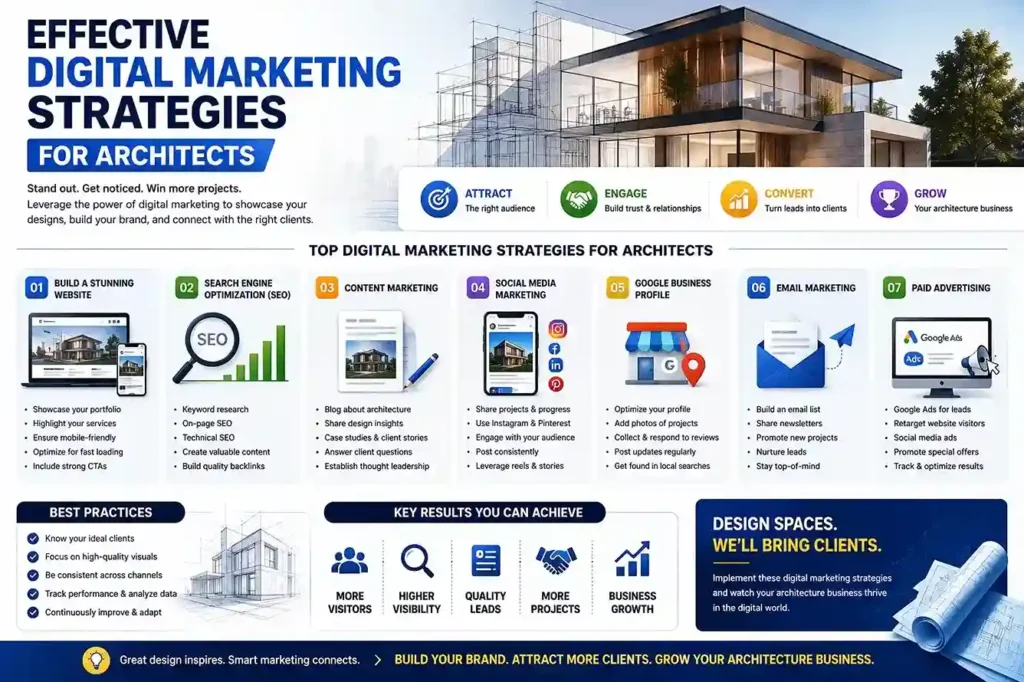

Architecture is a meticulous blend of art, science, and engineering. You spend your days conceptualizing breathtaking spaces, drafting precise blueprints, and turning your clients’ dreams into tangible realities. But in today’s digital-first world, even the most innovative designs will not sell themselves. If your firm relies entirely on traditional word-of-mouth referrals, you are likely leaving significant revenue on the table.
The landscape of marketing for architects has evolved dramatically. Today, potential clients—whether they are homeowners looking for a custom build or commercial developers seeking sustainable office spaces—start their search on Google, Instagram, or Pinterest. Adopting a tailored approach to architecture digital marketing is no longer just an option; it is a vital component of your business growth.
Table of Contents

In this comprehensive guide, we will explore the most effective digital marketing strategies tailored specifically for your industry. From mastering search engines to leveraging visual platforms, here is your blueprint for success.
Why You Need a Dedicated Digital Marketing Solution for Architects
Historically, the architecture, engineering, and construction (AEC) sectors relied heavily on networking and physical portfolios. However, understanding how to get architecture clients online requires a shift in perspective.
Modern consumers want to research your past projects, read client testimonials, and understand your design philosophy before they ever pick up the phone. This shift has given rise to the necessity of inbound marketing for the AEC industry. Instead of aggressively chasing down leads, inbound marketing focuses on creating valuable online experiences that naturally attract your ideal clients.
By implementing a comprehensive digital marketing solution for architects, you ensure that your firm is consistently visible to people actively searching for your specific expertise.
The Foundation: Architectural Portfolio Website Optimization
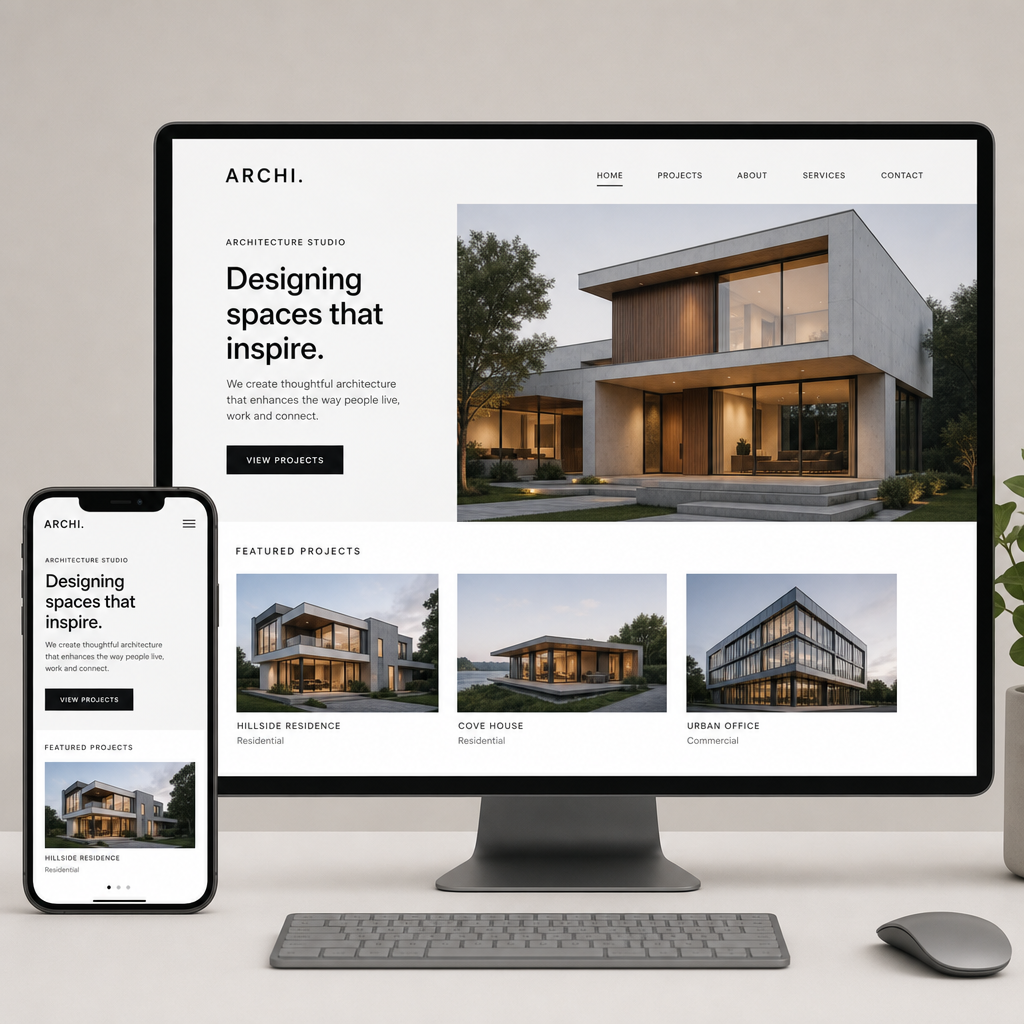
Before you invest time or money into driving traffic, you must ensure that your digital storefront is ready to convert visitors into clients. Your website is the heart of digital marketing for architects.
However, having a website is not enough. You need rigorous architectural portfolio website optimization. Many architects make the mistake of building websites that look like beautiful art galleries but function poorly from a user experience (UX) and technical standpoint.
To optimize your online portfolio:
- Prioritize loading speed: High-resolution project photos are essential, but if they take ten seconds to load, potential clients will bounce. Compress your images without sacrificing quality.
- Ensure mobile responsiveness: Over half of all web traffic comes from mobile devices. Your site must look and function flawlessly on smartphones.
- Clear Calls-to-Action (CTAs): Don’t just show pretty pictures. Guide the user on what to do next with clear CTAs like “Schedule a Design Consultation” or “View Our Process.”
Furthermore, integrating search engine optimization for architectural portfolios ensures that when you upload a new project, search engines understand what the images represent. Use descriptive file names and alt tags (e.g., “modern-sustainable-kitchen-design-seattle.jpg” instead of “IMG_4920.jpg”).
Mastering SEO for Architects
Having a stunning website is practically useless if no one can find it. This is where SEO for architects comes into play. SEO (Search Engine Optimization) is the process of improving your website’s visibility on search engines.
Cracking the Code: How to Rank Architecture Websites on Google
Understanding how to rank architecture websites on google requires a mix of technical SEO, high-quality content, and strategic keyword placement. Focus on long-tail keywords that reflect user intent. Instead of trying to rank for the highly competitive term “architect,” aim for specific phrases like “residential architect for mid-century modern remodels.”
Local SEO for Design Firms
Architecture is largely a location-based service. Therefore, local SEO for design firms is an absolute necessity. When a potential client searches for “architect near me” or “residential architect in [City],” you want your firm to appear at the very top of the search results, specifically in the Google Local Pack (the map section).
To achieve this, claim and optimize your Google Business Profile for architectural practices.
- Ensure your Name, Address, and Phone number (NAP) are consistent across the web.
- Regularly upload high-quality photos of your completed projects and works-in-progress to your profile.
- Actively encourage satisfied clients to leave positive reviews. Reviews are a massive ranking factor for local searches.
For smaller practices, mastering local search is the number one method for increasing online visibility for boutique architecture firms without needing a massive advertising budget.
Winning Social Media & Visual Platforms
Because architecture is an inherently visual medium, social media is one of the most powerful tools in your marketing arsenal. However, not all platforms are created equal. Identifying the best social media platforms for residential architects versus commercial firms will dictate where you should spend your time.
Visual Storytelling on Instagram for Designers
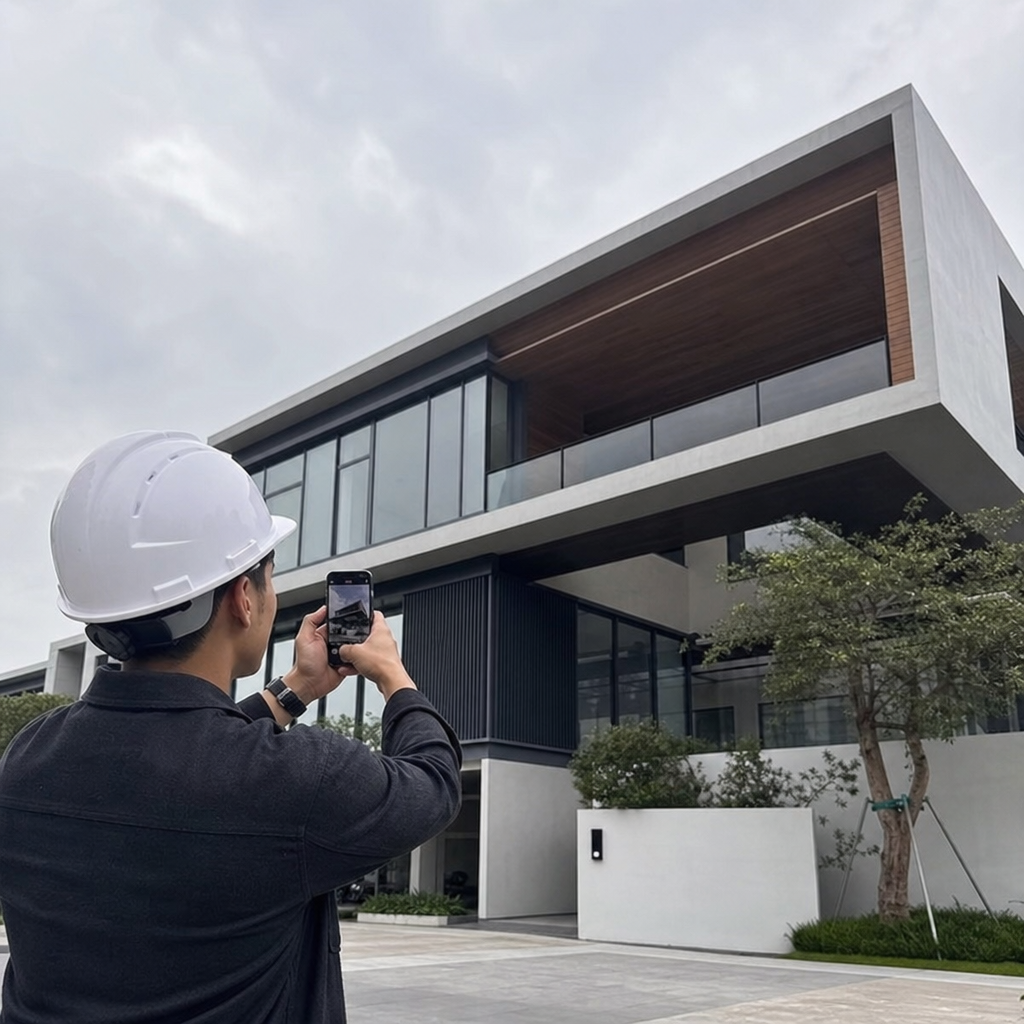
Instagram is arguably the most critical platform for residential and boutique architects. But simply posting a finished photo isn’t enough; you must engage in visual storytelling on instagram for designers.
People connect with the process of design. Share behind-the-scenes content:
- Time-lapse videos of a site visit or drafting process.
- Carousel posts detailing the “before and after” of a renovation.
- Stories that explain the challenges of a specific build and how your firm overcame them.
Using Pinterest to Showcase Architectural Design
While Instagram is great for immediate engagement, Pinterest is a powerful search engine in its own right. Potential clients often use Pinterest at the very beginning of their journey—gathering inspiration for their future dream homes.
By using pinterest to showcase architectural design, you can capture leads early in the funnel. Create specific boards for different styles (e.g., “Modern Farmhouse Exteriors,” “Minimalist Kitchen Layouts”). Crucially, ensure every pin links directly back to the corresponding project page on your website.
Houzz vs Instagram for Architectural Marketing
A common debate among professionals is Houzz vs Instagram for architectural marketing.
- Instagram is excellent for brand awareness, storytelling, and reaching a broad audience of admirers and potential clients.
- Houzz, on the other hand, is highly targeted. Users on Houzz are actively looking to hire professionals or buy materials for a home project.
The most effective strategy? Use both. Use Instagram to build your brand identity and following, and use Houzz to capture high-intent leads who are ready to start a project. Ensure your Houzz profile is fully fleshed out with project costs, detailed descriptions, and client reviews.
Content Marketing & Lead Generation
Blogging and content creation aren’t just for lifestyle influencers; they are critical tools for establishing authority in the architectural space.
Niched Content Marketing
Consider content marketing for sustainable architecture firms as an example. If your firm specializes in eco-friendly designs, you can write comprehensive blog posts about “The Best Sustainable Building Materials for 2024” or “How Passive Solar Design Lowers Your Energy Bills.”
When you write highly informative content tailored to your niche, you attract an audience searching for those exact solutions. This establishes trust before you even speak to the prospect.
Lead Generation Strategies for Solo Architects
If you are running a one-person firm, your time is your most valuable asset. Effective lead generation strategies for solo architects must be automated and efficient.
One of the best strategies is creating a “Lead Magnet.” Offer a free, downloadable resource on your website in exchange for a visitor’s email address. Examples include:
- The Ultimate Guide to Hiring an Architect for Your Custom Home
- A Budgeting Checklist for Major Home Renovations
- 5 Questions to Ask Before Buying a Plot of Land
This strategy turns anonymous website traffic into tangible leads you can nurture over time.
Nurturing Leads with Email Automation
Once a potential client downloads your guide and gives you their email, what happens next? Architecture sales cycles are notoriously long. A client might download your guide today but not be ready to break ground for another year.
This is where email marketing automation for design professionals becomes your silent sales team. Set up an automated sequence of emails (a “drip campaign”) that goes out to new subscribers over several weeks.
- Email 1 (Day 0): Deliver the promised guide and introduce your firm.
- Email 2 (Day 3): Share a case study of a recent successful project.
- Email 3 (Day 10): Explain your unique design philosophy and process.
- Email 4 (Day 20): Invite them to schedule a free, no-obligation discovery call.
Email automation keeps your firm top-of-mind, ensuring that when the client is finally ready to build, you are the first architect they call.
Partnering with Professionals
Implementing all of these strategies—from website optimization to social media management and email automation—requires significant time and expertise. As an architect, your primary focus should be on designing incredible spaces and managing your clients, not wrestling with search engine algorithms.
If you find that marketing is taking away from your billable hours, it is highly recommended to invest in professional digital marketing services for architects. Specialized marketing agencies understand the nuances of the AEC industry. They know how to translate your complex design language into accessible, highly converting online content.

Conclusion
The transition from traditional networking to a robust online presence is the most important step you can take to future-proof your practice. By optimizing your digital portfolio, mastering local search, engaging in visual storytelling, and automating your lead generation, you can build a predictable pipeline of high-quality clients.
Embracing digital marketing for architects is no longer a luxury reserved for massive international firms. Whether you are a solo practitioner or a growing boutique agency, the internet offers a level playing field. Implement these strategies consistently, and watch as your digital presence becomes just as structurally sound—and visually impressive—as the buildings you design.
Read more to Understand site Architecture for SEO success