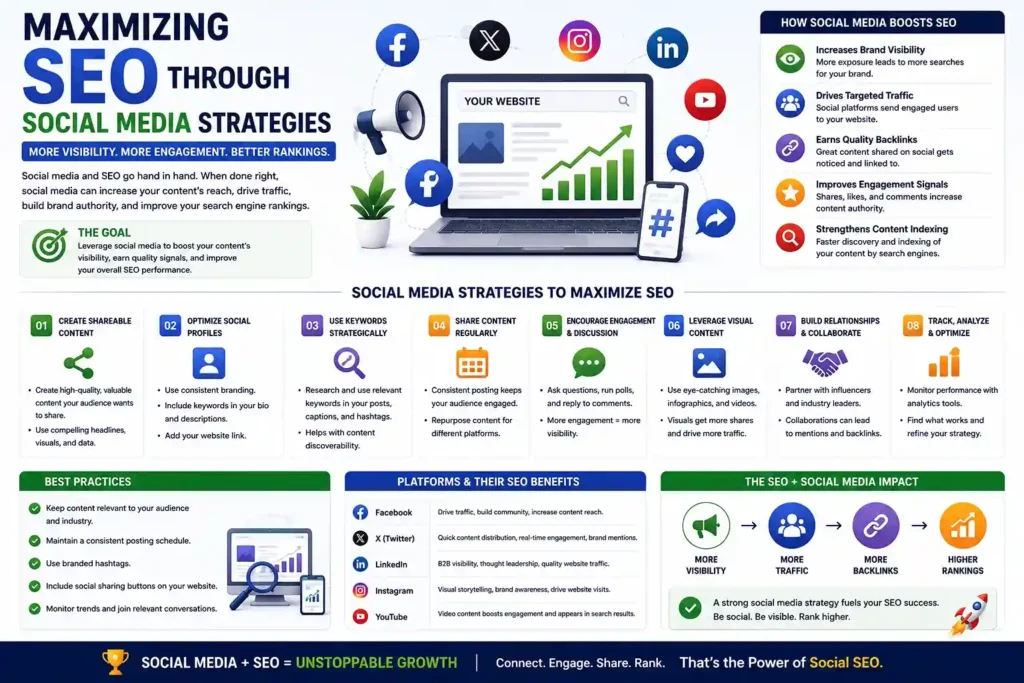
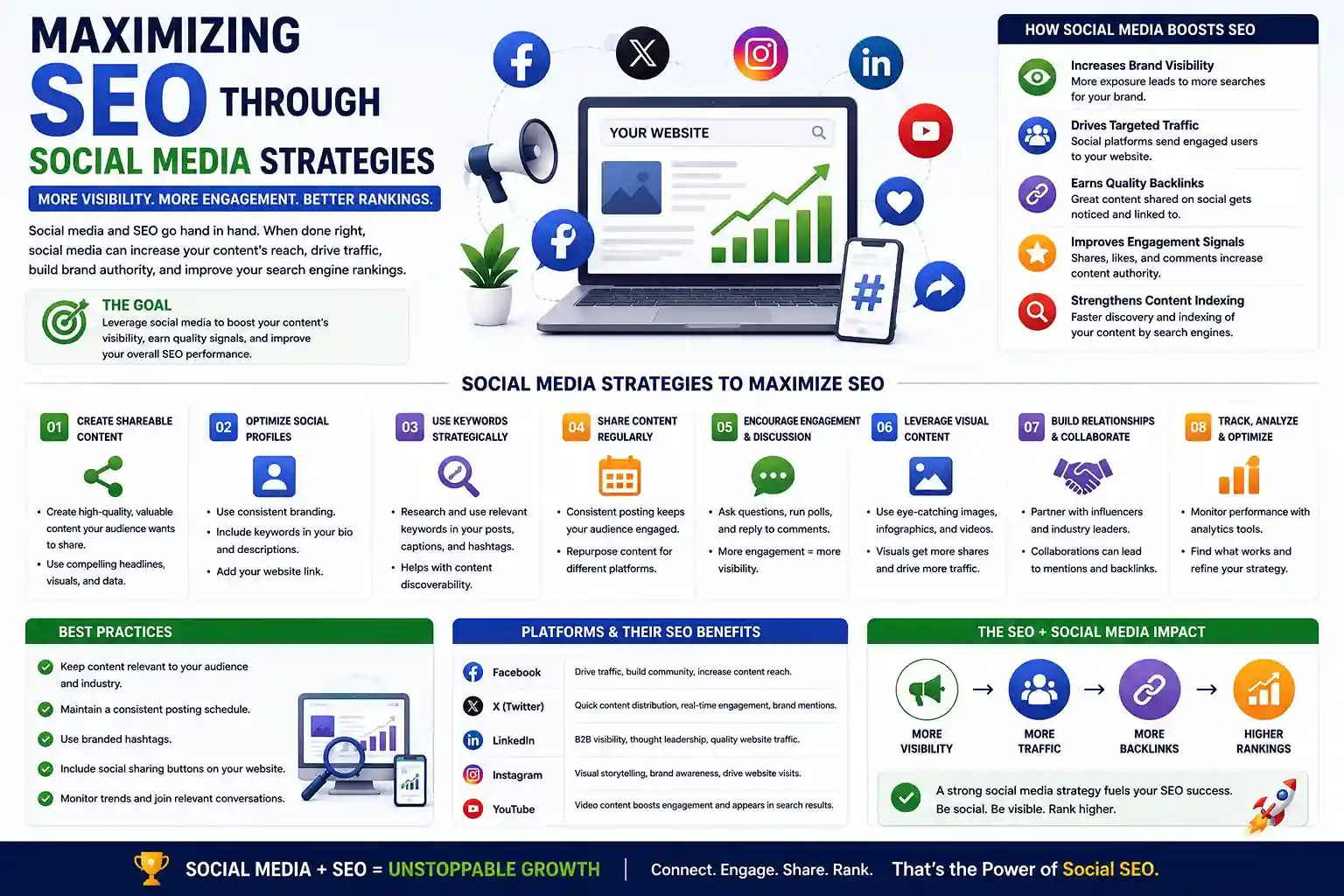

In today’s digital landscape, SEO and social media are powerful tools. They can significantly boost your online presence. But how do they work together?
Understanding the synergy between SEO and social media is crucial. Social media can drive traffic to your site, indirectly enhancing SEO. It also increases brand visibility and engagement.
Table of Contents
Social signals, like shares and likes, can influence search rankings. Consistent branding across platforms strengthens your SEO efforts. This integration is key to maximizing your digital strategy.
By leveraging social media, you can amplify your content’s reach. This leads to more backlinks and improved SEO performance. It’s about creating a cohesive strategy.
In this guide, we’ll explore effective strategies. Learn how to integrate social media with SEO for optimal results. Let’s dive in!
Understanding the Relationship Between SEO and Social Media
SEO and social media are interconnected but distinct. Both aim to enhance online visibility, yet they operate differently. Understanding their relationship is essential for a successful digital strategy.
Social media doesn’t directly impact search rankings. However, it supports your SEO efforts by increasing content visibility. Social platforms can drive significant traffic to your site.
Social signals, such as likes, shares, and comments, indicate content quality. While not direct ranking factors, they reflect audience engagement. This engagement can lead to increased site visits and backlinks.
Here’s how social media can influence SEO:
- Enhances content distribution.
- Increases brand awareness.
- Supports link-building efforts.
Optimizing social media profiles boosts searchability. Consistent branding and relevant keywords in your profiles can improve online visibility. This, in turn, supports your SEO goals.
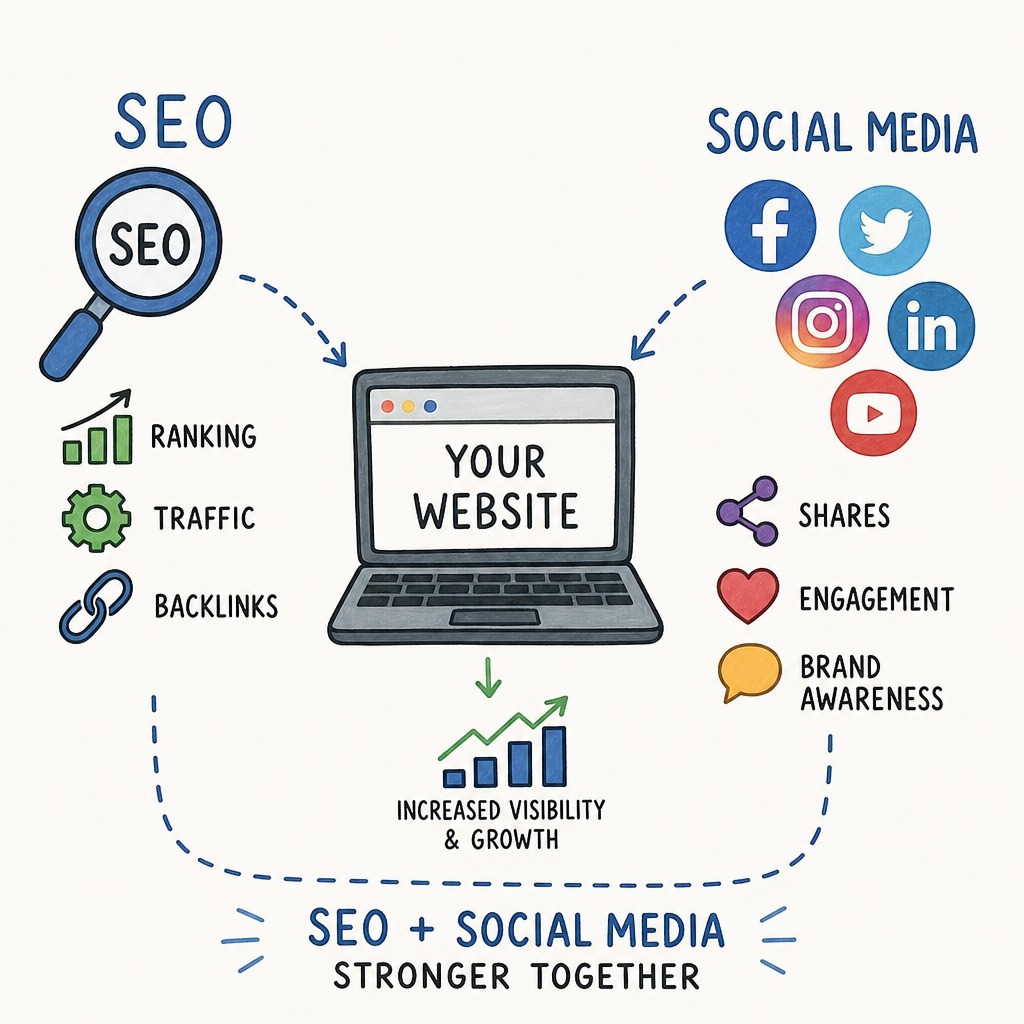
By creating engaging content, you build relationships with your audience. This can result in higher brand loyalty and more shares. When social media strategies and SEO work together, they create a unified online presence, driving better results.
Why Social Media Matters for SEO Success
Social media plays a crucial role in SEO success, enhancing online visibility and user engagement. While it doesn’t directly influence search engine algorithms, its indirect impact is significant.
Social platforms help distribute content to a broader audience. This increases the chances of acquiring backlinks, which are important for SEO. Backlinks from reputable sites boost your site’s authority and rankings.
Brand visibility is amplified through social media. Profiles often appear in search results, increasing brand awareness. This visibility leads to more site visits, indirectly improving your SEO.
Key reasons social media impacts SEO:
- Drives referral traffic.
- Boosts brand awareness.
- Encourages user-generated content.
Social media channels like Facebook or Twitter offer insights into audience behavior. These analytics are vital for refining content strategies. They can identify popular topics and adjust SEO efforts accordingly.

Ultimately, leveraging social media enriches your SEO strategy. It ensures wider content reach and supports long-term digital success.
Key Elements of an Effective SEO Social Media Strategy
Creating a successful SEO social media strategy requires well-defined elements. Understanding each component is crucial for maximum impact. Let’s explore the key elements that drive results.
First, consistent branding across all social media platforms and websites is essential. This consistency builds trust and recognition. It also ensures that your audience identifies your brand easily.
Next, engaging and shareable content is crucial. Content that resonates with your audience encourages interaction. High engagement on social media can generate more social signals, indirectly benefiting SEO.
Optimizing social media profiles with relevant keywords is vital. These profiles can appear in search results, enhancing your online presence. Including strategic keywords can boost the discoverability of your profiles.
Effective use of social media for SEO should include:
- Strategic keyword integration.
- Regular and varied content updates.
- Engagement with followers and influencers.
Visual content attracts more attention than text. Use high-quality images and videos to capture audience interest. They increase shares and, consequently, traffic to your site.

Finally, monitoring analytics is essential for refining strategies. Using social media insights helps understand what resonates with your audience. This feedback is valuable for ongoing adjustments and achieving SEO goals.
Optimizing Social Media Profiles for SEO
Optimizing your social media profiles is a fundamental step in enhancing SEO. Each detail plays a role in search engine recognition. Properly set up profiles can attract more followers and drive traffic.
Start with a consistent username across all platforms. This uniformity aids brand recall and helps users find you easily. It also contributes to a cohesive online brand presence.
Write a compelling and keyword-rich bio. Include your most relevant SEO keywords naturally. This increases the chances of your profile appearing in relevant search results.
Link back to your website from your social media profiles. This not only directs traffic but also strengthens your site’s online authority.
Consider the following checklist when optimizing social media profiles:
- Consistent branding elements.
- Keyword integration in bios and descriptions.
- URL links to your main website.

Regular updates to your profiles keep them fresh. Use these opportunities to adjust keywords and highlight new content. This ensures your profiles remain relevant and engaging.
Creating and Sharing SEO-Friendly Content on Social Platforms
Crafting SEO-friendly content for social media is vital to boosting visibility and engagement. Start by understanding your audience’s preferences and interests. Align your content with these insights to maximize impact.
Incorporate relevant keywords naturally into your posts. Use them in captions, hashtags, and even images. This practice enhances searchability and attracts the right audience.
Focus on creating diverse content types. Mix images, videos, infographics, and text to keep your audience engaged. Different formats appeal to varying user preferences, expanding your content’s reach.
Encourage user-generated content by inviting followers to share their experiences. This not only enriches your content pool but also builds community engagement.
To optimize your content-sharing strategy, consider these tactics:
- Schedule posts for peak engagement times.
- Tailor content for each platform’s unique audience.
- Use analytics to refine and improve future content.

Finally, monitor your content’s performance closely. Use social analytics to gauge which types and topics resonate most. Adapt your strategy based on these insights to continually enhance SEO potential.
Leveraging Social Signals and Engagement for Better Rankings
Social signals, such as likes, shares, and comments, can indirectly influence your SEO. These signals indicate content popularity and relevance. More engagement often leads to greater visibility.
When content gets shared across platforms, it attracts new visitors. These visitors may spend more time on your website. This increased dwell time can boost SEO rankings.
Interactions on social media help amplify your content’s reach. By engaging actively with your audience, you encourage them to share and comment. Their participation acts as a vote of confidence in your content.
To further leverage social engagement, consider implementing these practices:
- Respond promptly to comments and messages.
- Encourage discussions by asking questions in posts.
- Use engaging visuals to captivate your audience.

Remember, the goal is not just to collect likes but to foster genuine interactions. Such meaningful engagements can enhance your overall media SEO efforts.
Using Social Media for Keyword Research and Trend Analysis
Social media platforms are treasure troves for keyword insights. Users share their thoughts and interests daily. Analyzing this data can reveal emerging trends.
Monitoring hashtags and trending topics helps identify popular search terms. These insights can guide your SEO content creation efforts. Incorporate them into your strategy to stay relevant.
Additionally, social media platforms often provide built-in analytics tools. These tools can help you discover what content resonates with your audience. By understanding this, you can better tailor your SEO and social media marketing strategies.
To effectively use social media for research, consider these tips:
- Track trending hashtags related to your niche.
- Analyze competitor posts for keyword ideas.
- Utilize social listening tools to gather insights.

Being proactive in using social media for research can keep your strategies ahead of the curve. By aligning your content with current trends, you enhance its SEO potential significantly.
Cross-Promotion: Integrating Social Media and Website Content
Cross-promotion is essential for a unified online presence. By integrating social media with your website, you can maximize reach. This strategy enhances both visibility and engagement.
Creating cohesive content across platforms establishes brand consistency. Share blog posts on social media to drive website traffic. Furthermore, encourage followers to explore related content on your site.
For effective cross-promotion, consider these practices:
- Embed social media feeds on your website.
- Use website content to drive social media discussions.
- Create exclusive offers on one platform and promote them on the other.

Cross-promotion does more than boost SEO and social media marketing goals. It creates a seamless experience for users, strengthening brand recognition.
Measuring and Managing SEO and Social Media Performance
Measuring performance is vital for refining strategies. It ensures efforts in SEO social media yield positive results. Using analytic tools helps track progress efficiently.
Key metrics to monitor include traffic, engagement, and conversion rates. Understanding these metrics can uncover insights into audience behavior. They reveal which strategies are working and which need adjustments.
Consider these tools to evaluate performance:
- Google Analytics for website traffic insights.
- Social media analytics for engagement trends.
- SEO tools for keyword effectiveness and search rankings.

Combining insights from multiple sources provides a comprehensive view. This information is crucial for informed decision-making and continuous improvement. Streamlining both SEO and social media efforts will ultimately enhance your overall digital strategy.
Best Practices and Tips for SEO Social Marketing
To excel in SEO social marketing, adaptability is crucial. Techniques constantly evolve, requiring agility and up-to-date knowledge.
One effective approach is consistent branding. Ensure that your brand’s voice and visuals are uniform across all platforms. This enhances recognition and trust.
Use the following tips for effective SEO and social integration:
- Optimize social profiles with keywords.
- Engage in real-time with audiences for better insights.
- Leverage visual content like infographics for higher engagement.

Keep track of trends and adapt content accordingly. Analyzing competitor strategies can uncover valuable insights. Continuous learning ensures you stay ahead in this dynamic field. Balancing creativity with data-driven decisions is key to success.
Conclusion: Building a Unified SEO and Social Media Approach
Integrating SEO and social media strategies offers numerous benefits. A unified approach enhances online presence, increases visibility, and drives engagement.
Adaptability and innovation are key in this evolving landscape. By effectively merging these tools, your brand can achieve sustained growth and resonate with broader audiences. Prioritize collaboration between teams for a consistent and strategic impact.