


Technical SEO Explained
Technical SEO is the backbone of a website’s search engine success. It ensures that your site is accessible and understandable to search engines. Without it, even the best content can go unnoticed.
Understanding technical SEO is crucial for anyone looking to improve their website’s performance. It involves optimizing various elements that affect how search engines crawl and index your site. This includes site speed, mobile-friendliness, and secure connections.
A well-structured website is essential for both users and search engines. It helps in distributing link equity and improving navigation. Technical SEO lays the foundation for a successful SEO strategy.
Regular audits are necessary to maintain a website’s health. They help identify and fix issues that could hinder performance. With the right tools and practices, you can ensure your site remains competitive in search rankings.
Table of Contents
What Is Technical SEO?
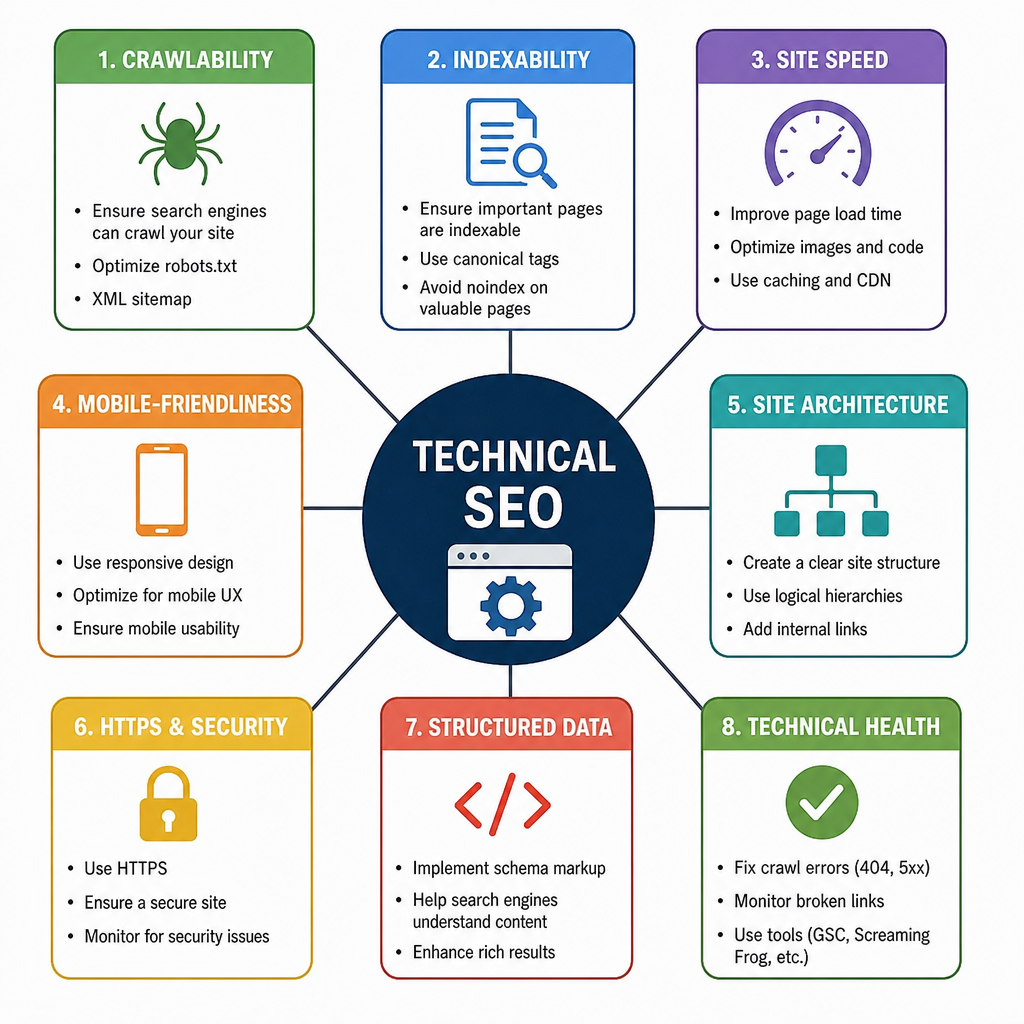
Technical SEO refers to optimizing a website’s infrastructure for better search engine visibility. It focuses on improving the technical aspects of a website. This makes it easier for search engines to crawl, interpret, and index your site.
Key elements include site speed, mobile optimization, and secure connections. These components play crucial roles in how well search engines rank your site. A website that is technically sound offers a seamless experience for both users and search engines.
Technical SEO ensures that a website meets current search engine requirements. Without it, even high-quality content might fail to achieve desired visibility. Understanding and implementing technical SEO is essential for any website aiming for better search rankings.
Here’s what technical SEO encompasses:
- Site structure and navigation
- XML sitemaps and robots.txt files
- SSL certificates and secure connections (HTTPS)
- Page speed optimization
- Mobile responsiveness
Each of these elements contributes to a site’s searchability and performance. A well-optimized technical SEO strategy benefits the entire website’s health. By ensuring these factors are in place, you set a strong foundation for other SEO efforts.
Why Is Technical SEO Important?
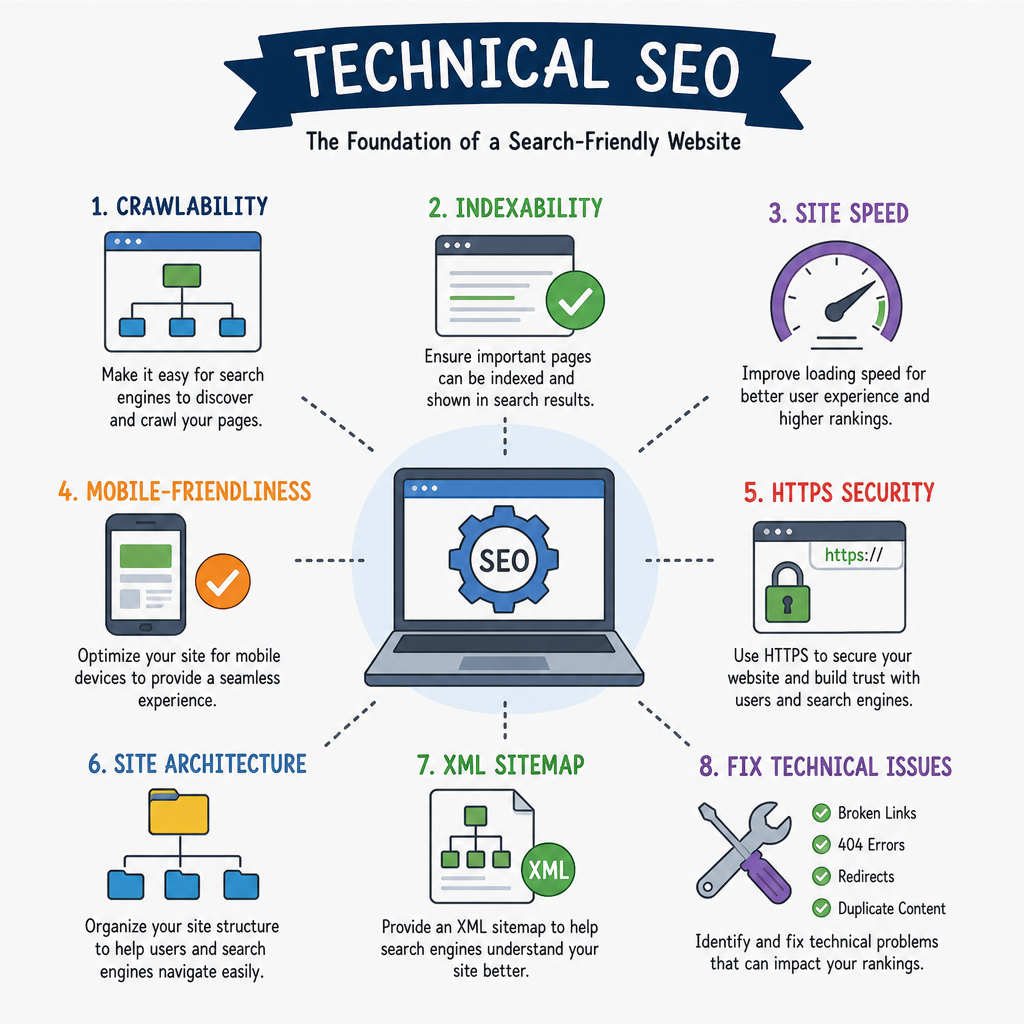
Technical SEO is crucial for several reasons. It lays the foundation for a site’s overall SEO strategy. Without it, even the best content can struggle to rank well in search engines.
A well-optimized technical framework improves user experience. Page speed, mobile-friendliness, and security are parts of this. When these are in place, users have a smooth and secure experience on your site.
Technical SEO ensures search engines can crawl and index your site easily. This accessibility directly impacts your rankings. If search engines can’t access your content, it doesn’t matter how relevant it is.
Here are some aspects that highlight the importance of technical SEO:
- Enhances website speed, leading to better user engagement
- Improves mobile usability to cater to the vast number of mobile users
- Secures the website with HTTPS, building user trust
Ignoring technical SEO can lead to crawl errors and indexing issues. These problems can significantly lower your site’s visibility. Technical SEO helps in identifying and fixing such issues.
In today’s competitive online space, maintaining robust technical SEO is not optional. It’s an ongoing process that requires regular updates and monitoring. Investing time in technical SEO can yield significant long-term benefits.

Key Technical SEO Factors
Understanding the main components of technical SEO is essential. These factors play a significant role in how well your site performs in search engines. Addressing them can lead to improved visibility and user experience.
One critical factor is site speed. A faster site keeps users engaged and decreases bounce rates. Search engines also favor fast-loading websites. They rank higher in search results, making speed optimization essential.
Mobile-friendliness is another crucial aspect. With many users accessing sites via mobile devices, responsive design is non-negotiable. Google’s mobile-first indexing means a site must be optimized for mobile use.
Next, secure connections are necessary. Having HTTPS in place builds user trust and confidence. Search engines use it as a ranking signal. Therefore, secure sites have an advantage over non-secure ones.
Consider the following key technical SEO factors:
- XML sitemaps for better indexing
- Robots.txt to guide search engine crawlers
- Canonical tags to prevent duplicate content issues

Structured data is also vital. It helps search engines understand your site’s content better. This can lead to higher chances of appearing in rich snippets and other search features.
Technical SEO is about building a strong foundation. It ensures your website’s structure supports both user experience and search visibility. By focusing on these factors, you can significantly enhance your site’s overall SEO strategy.
The Best Site Structure for SEO
A well-organized site structure is crucial for SEO success. It helps search engines and users navigate your website efficiently. A clear structure enhances user experience and boosts your site’s visibility in search results.
Consider the hierarchy of your website. Organize pages into categories and subcategories. This logical flow should guide visitors smoothly through the content. Hierarchical structures make it easier for search engines to index your site.
Internal linking is a key element of good site structure. It helps distribute page authority and boosts navigation. Links should connect related content logically and naturally. This aids in keeping users engaged and reducing bounce rates.
Here are elements of the best site structure for SEO:
- Logical hierarchy with main categories
- User-friendly, descriptive URLs
- Strategic internal linking for seamless navigation

Properly structured URLs are also vital. Clean, simple URLs with keywords enhance both user experience and search engine understanding. They should reflect the content accurately and avoid unnecessary characters.
Incorporating these elements will help establish a strong foundation. Effective site structure not only benefits search engines but also improves user satisfaction, ultimately leading to better rankings.
Conducting a Technical SEO Audit
Conducting a technical SEO audit is fundamental for maintaining a healthy website. This process identifies and rectifies issues affecting site performance. Regular audits are crucial in adapting to changing SEO landscapes.
Begin by analyzing your site’s speed. Slow loading pages can deter users and impact rankings. Tools like Google PageSpeed Insights provide actionable insights. Addressing speed issues is essential for optimal user experience.
Mobile-friendliness is another crucial factor. With more users on mobile devices, ensuring a responsive design is vital. Google’s Mobile-Friendly Test can verify your site’s mobile compatibility. Adjust designs to ensure seamless browsing across all devices.
During an audit, also check for security protocols. HTTPS encryption is a must for protecting user data. Secure sites also rank better on search engines. Implementing SSL certificates can enhance security and trustworthiness.
Here’s a checklist of essential steps for a technical SEO audit:
- Evaluate page speed and load times
- Test mobile responsiveness and usability
- Verify HTTPS and security measures
- Analyze XML sitemaps for errors
- Check for crawl and index issues

By systematically following these steps, you can pinpoint technical issues. A thorough audit not only helps in correcting problems but also ensures your site remains competitive. Regular audits are vital in maintaining a robust online presence.
Essential Tools for Technical SEO Audits
Using the right tools is crucial for an effective technical SEO audit. These tools help identify issues quickly, allowing for prompt resolutions.
Google Search Console is an invaluable asset for website diagnostics. It highlights crawl errors, security issues, and indexing problems. This tool is fundamental for maintaining site health.
Another popular tool is Screaming Frog SEO Spider. It provides comprehensive data on page elements like titles, meta tags, and links. This desktop program helps in identifying duplicate content and other SEO pitfalls.
For a more detailed analysis, consider using SEMrush. It offers insights into site performance, backlink profiles, and competitor analysis. SEMrush provides a holistic view of your website’s health and potential areas for improvement.
Here’s a quick list of essential tools for technical SEO audits:
- Google Search Console
- Screaming Frog SEO Spider
- SEMrush
- Moz Pro
- Ahrefs

These tools streamline the audit process, offering a range of capabilities to suit your needs. Choosing the right tools can save time and enhance the effectiveness of your SEO strategy. Consistent use of these resources ensures your website remains in top shape.
Common Technical SEO Issues and How to Fix Them
Despite best efforts, technical SEO issues can arise, impacting website performance and rankings. Identifying these issues is the first step towards resolving them.
One common problem is slow page loading speed. This can deter users and affect search rankings. Compress images and leverage browser caching to improve speed.
Another issue is the lack of mobile optimization. With more users browsing on mobile, a non-responsive site can hurt your SEO. Ensuring your website is mobile-friendly is essential.
Broken links also pose a problem for website usability and SEO. Users and search engines both need functional links. Regularly scan for and fix broken links to maintain site integrity.
Duplicate content can lead to indexing issues. Use canonical tags to tell search engines which version of a page is the primary one. This helps prevent confusion and ensures proper indexing.
Here’s a list of common technical SEO issues with quick solutions:
- Slow loading speed: Optimize images, enable caching
- Mobile optimization: Use responsive design
- Broken links: Regular link checks and fixes
- Duplicate content: Implement canonical tags

Proactively addressing these issues improves user experience and search engine performance. Regular monitoring helps maintain a healthy website and boosts SEO outcomes.
Maintaining Technical SEO: Best Practices
Maintaining technical SEO requires consistent effort and attention. Keeping your website’s infrastructure optimized involves regular updates and checks. This ongoing diligence ensures your site remains technically sound and competitive.
Regular SEO audits are crucial for identifying hidden issues. These audits help you catch potential problems before they escalate. They also provide insights into which areas may need improvement.
Keeping your site’s software updated is another key practice. Ensure your content management system and plugins are running the latest versions. This can fix vulnerabilities and improve performance.
Monitoring website performance metrics is essential. Analyze data for page speed, bounce rates, and crawl errors. Addressing anomalies quickly helps maintain optimal site function.
A checklist for ongoing technical SEO maintenance includes:
- Conduct regular SEO audits
- Update site software frequently
- Monitor performance metrics
- Fix identified issues promptly

By following these practices, you establish a strong foundation for your site’s ongoing success. Consistency in maintenance ensures your website remains user-friendly and easily navigable for search engines.
Conclusion: The Ongoing Value of Technical SEO
Technical SEO is integral to your website’s long-term success. It underpins all other SEO strategies by providing a strong technical foundation. Without it, your site may struggle to reach its full potential in search engine rankings.
Continuous monitoring and updates are vital to stay ahead in the digital landscape. As search engines evolve, keeping your site’s technical elements optimized is paramount. This ongoing commitment not only enhances visibility but also boosts user experience. Embracing technical SEO ensures your website remains competitive and poised for growth.