
Understanding Content Authority in SEO
In the digital age, content is king. But what makes content truly powerful? It’s authority. Content authority is the trust and credibility your content holds in a specific niche.
Topical authority, on the other hand, is about mastering a subject comprehensively. Both are crucial for SEO success. They help improve search rankings and drive organic traffic.
Understanding these concepts is vital for digital marketers and content creators. It can transform your content marketing strategy.
This guide will explore content and topical authority. Learn why they matter and how to build them effectively.
Table of Contents
What Is Content Authority and Topical Authority?
Content authority relates to your content’s credibility in a niche. It shows expertise and reliability. This credibility can enhance search engine rankings.
Topical authority, however, is broader. It’s about covering a subject deeply and thoroughly. It requires publishing consistently high-quality content on a topic.
Establishing content authority involves several key factors, including:
- Comprehensive knowledge of the subject.
- Consistent publication of valuable content.
- Engagement with your audience.
Topical authority is achieved by becoming an expert in your field. This signals expertise to search engines and users. It helps build trust over time.
Why is this important? Search engines, like Google, prioritize authoritative content. They rank such content higher, increasing visibility.
Building both content and topical authority is essential for SEO. Together, they enhance online presence and drive organic growth.

Why Content Authority Matters for SEO
Content authority is crucial for ranking. It signifies expertise and trust. These factors influence search engines’ decisions.
When search engines trust your content, they display it prominently. Higher rankings lead to increased traffic. This is vital for online success.
Content authority boosts brand credibility. Users trust authoritative sources. Consequently, users are more likely to engage and return.
Consider the benefits of content authority for SEO:
- Improves search engine rankings.
- Increases organic traffic and visibility.
- Enhances user trust and engagement.
Building content authority enhances user experience. Quality content meets user needs effectively. This results in longer site visits and lower bounce rates.
Ultimately, content authority aids long-term success. It helps create sustainable growth in a competitive market. Understanding its importance is the first step in effective SEO strategy.
The Relationship Between Content Marketing, Content Strategy, and SEO
Content marketing and SEO rely heavily on a well-defined content strategy. A structured strategy aligns your content with audience needs and search engine requirements.
An effective content strategy is more than just planning. It involves creating valuable content aimed at engaging your target audience. This increases the chances of your content ranking well on search engines.
Content marketing is the process of promoting this content. Its purpose is to attract, engage, and convert visitors into customers. Together, they form a powerful combination driving online visibility.
SEO focuses on optimizing content for search engines. When combined with content marketing, it ensures that users find relevant information quickly.
Consider these components of the relationship:
- Content strategy as the blueprint.
- Content marketing as the execution.
- SEO as the optimization layer.
These elements collaborate to boost online presence. Together, they create a seamless user experience while improving search rankings.

How to Build Topical Authority: Step-by-Step Guide
Building topical authority doesn’t happen overnight. It’s a strategic effort that involves several key steps. Each step focuses on strengthening your position as an authority in your field. By following this guide, you can enhance your content’s credibility.
Consistency is vital in this process. You must produce and update valuable content regularly. Over time, this establishes trust with your audience and search engines.
Begin with a plan that identifies both your core topic and audience. This foundational step ensures your content aligns with audience expectations.
Next, delve into keyword and topic research. This will help you to understand search demand and uncover content gaps. It’s crucial for tailoring your content effectively.
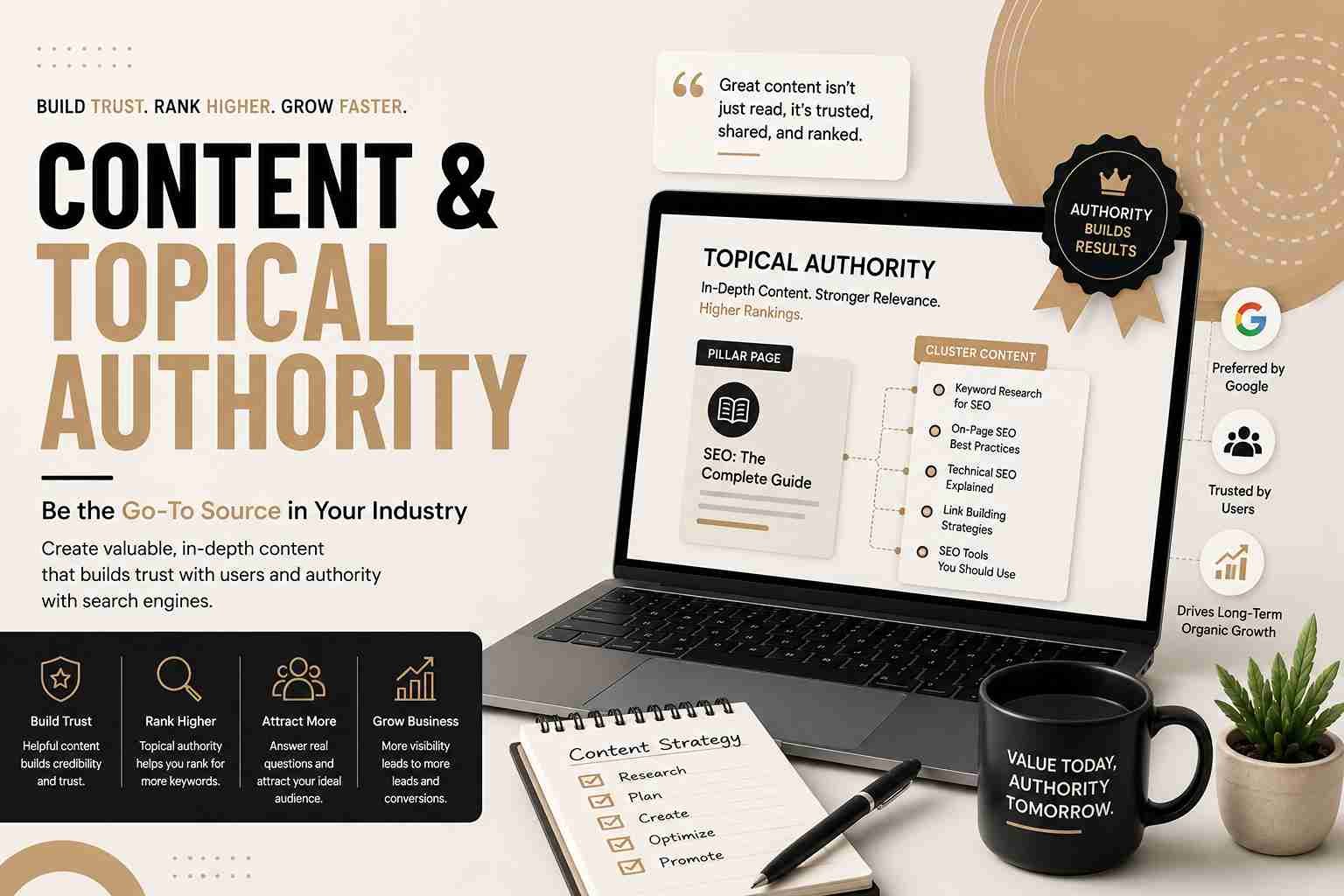
Creating pillar content and clusters around a central theme enhances your topical authority. It allows you to cover subjects comprehensively and boosts search visibility.
Optimizing your SEO content is essential. It involves using keywords strategically and improving readability.
Lastly, focus on building backlinks from authoritative sources. They are a potent endorsement of your expertise and authenticity.
Step 1: Identify Your Core Topic and Audience
Start by defining your core topic. It’s the subject where you aim to become an authority.
Next, identify your target audience. Understand their interests and pain points.
Consider these questions:
- What topics resonate most with my audience?
- What challenges do they face?
Step 2: Conduct Keyword and Topic Research
Delve into detailed keyword research. It’s a cornerstone of effective SEO and content marketing strategy.
Analyze competitor content. Identify gaps and opportunities for your content.
Focus your research on:
- Keywords with search volume and relevance.
- Topics your competitors may overlook.
Step 3: Create Pillar Content and Content Clusters
Craft comprehensive pillar content. It acts as a core guide on a broad subject.
Build supporting content clusters. These pieces should delve into subtopics linked to your pillar content.
To maintain cohesion:
- Ensure content is interconnected with internal links.
- Address all facets of your main topic.

Step 4: Optimize SEO Content for Authority
SEO optimization is crucial. Enhance content quality by integrating keywords naturally.
Ensure your content is readable and accessible. This aligns well with both human users and search algorithms.
Optimization should focus on:
- Relevant keyword placement.
- Enhancing user experience and engagement.

Step 5: Build Backlinks and Leverage Authoritative Sources
Work on acquiring quality backlinks. They are endorsements of your content’s credibility.
Reach out to industry experts. Collaborating with them can boost your authority significantly.
Consider these approaches:
- Guest blogging on reputable sites.
- Citing credible sources within your content.
Measuring and Maintaining Content Authority
Measuring content authority ensures your efforts bear fruit. Analyzing specific metrics helps assess effectiveness. Pay attention to these key indicators.
Track organic traffic to gauge content visibility. More visitors can signal authority growth. Similarly, monitor engagement metrics like time on page and bounce rate.
Check backlink quality and quantity. These are endorsements from other reputable sites. A higher number of quality backlinks often means increased authority.
Consider creating a list of metrics to track:
- Organic traffic growth
- Backlink profile improvements
- Engagement metrics like time on page
Maintaining authority involves regular content updates. Refresh content to keep it relevant and engaging. This continual improvement fosters trust among your audience.

Common Mistakes to Avoid in Building Topical Authority
Building topical authority is crucial, yet pitfalls are common. Ignoring audience needs can hinder success. Always prioritize understanding and addressing their concerns.
Overemphasizing quantity over quality is another frequent error. Focus on producing high-quality, comprehensive content instead of churning out numerous mediocre pieces.
Failing to update content regularly is a missed opportunity. Keeping content fresh maintains its relevance and authority. This requires ongoing commitment and effort.
Be mindful of these common mistakes:
- Neglecting audience interests
- Prioritizing content quantity over quality
- Overlooking the necessity of content updates
Avoiding these pitfalls enhances your ability to build strong topical authority. This ultimately fosters trust and recognition among your audience.
Future Trends: Topical Authority and Evolving SEO Strategies
The landscape of SEO is constantly evolving, emphasizing the importance of topical authority. Search engines increasingly prioritize content that demonstrates expertise and depth.
Emerging trends suggest a shift towards personalized search experiences. Tailoring content to individual user needs will become essential in establishing authority and engagement.
Visual and interactive content is also gaining traction. Incorporating diverse formats can enhance user experience and support authority-building efforts. Consider exploring the following:
- Personalized user experiences
- Visual and interactive content
- Enhanced audience engagement

Incorporating these strategies will not only boost topical authority but also align with future SEO trends. Staying ahead of these changes is crucial for long-term success.
Conclusion: The Long-Term Value of Content Authority
Understanding content authority is pivotal for sustained success in digital marketing. Establishing authority enhances your brand’s visibility and credibility.
By consistently creating valuable content, you nurture audience trust and engagement over time. This leads to higher conversion rates and customer loyalty.
Maintaining content authority demands dedication. It involves continuous improvement and adaptation to changes in the industry.
Ultimately, investing in content authority pays off. It sets your brand apart in competitive markets and supports long-term business growth.